
Torah Reading: Genesis 23:1 – 25:18
Parasha: Chayei Sarah
The parasha of Chayei Sarah (The Life of Sarah) holds a profound mystery from its very title. It begins by reporting the physical departure of the matriarch Sarah and concludes with Abraham’s descent into eternal rest; yet the wisdom of the Torah does not call this passage “Death,” but “Life.”
This is not a literary coincidence, but a lesson in spiritual and human leadership: the true dimension of a person’s life is not measured solely by the years spent on this plane, but by the foundations of continuity, integrity, and values they leave established for the generations to come.
Between the initial mourning and the final farewell, we witness three fundamental pillars that transform pain into an enduring legacy.
The parasha begins with the death of Sarah and concludes with the death of Abraham.
Between both farewells we find three acts of continuity:
The purchase of Machpelah, the marriage of Isaac and Rebecca, and the consolidation of Abraham’s legacy for future generations.
THE DEPARTURE OF SARAH
The Torah shows us a husband who loves his wife.
(…) and Abraham came to mourn for Sarah and to weep for her. – Genesis 23:2
A man of faith who also knows the pain of loss.
Perhaps one of the most beautiful teachings of this passage is that spirituality does not eliminate human feelings.
Faith does not prevent weeping.
Trust in Hashem does not annul mourning.
Abraham knows that life continues, but before moving forward he allows himself to honor Sarah’s memory with tears, respect, and love.
And perhaps precisely because he loved her so much, he takes care to ensure her a dignified and permanent burial.
Abraham rose from before his dead (Genesis 23:3).
THE CAVE OF MACHPELAH
Hashem had promised the land to Abraham, but he does not take it by force nor demand special privileges. He negotiates with Ephron, pays the full price, and legally acquires the property before witnesses.
There he pronounces words that continue to resonate to this day:
“Ger v’toshav anojí imajem” — “I am a foreigner and a resident among you.”
Abraham lives a paradox: he inhabits the land and, at the same time, considers himself a sojourner. He possesses a divine promise, yet he acts with humility and respect.
The purchase of Machpelah is much more than a real estate transaction. It is an act of faith, Abraham’s first legal possession in the promised land, and a declaration of hope for the future. While burying Sarah, he also establishes a permanent bond with the land for the generations to come.
According to Jewish tradition, Machpelah is also the place where Adam and Eve rest. Later, Abraham and Sarah, Isaac and Rebecca, and Jacob and Leah would be buried there. That is why the cave becomes a symbol of continuity, memory, and belonging.
A WIFE FOR MY SON
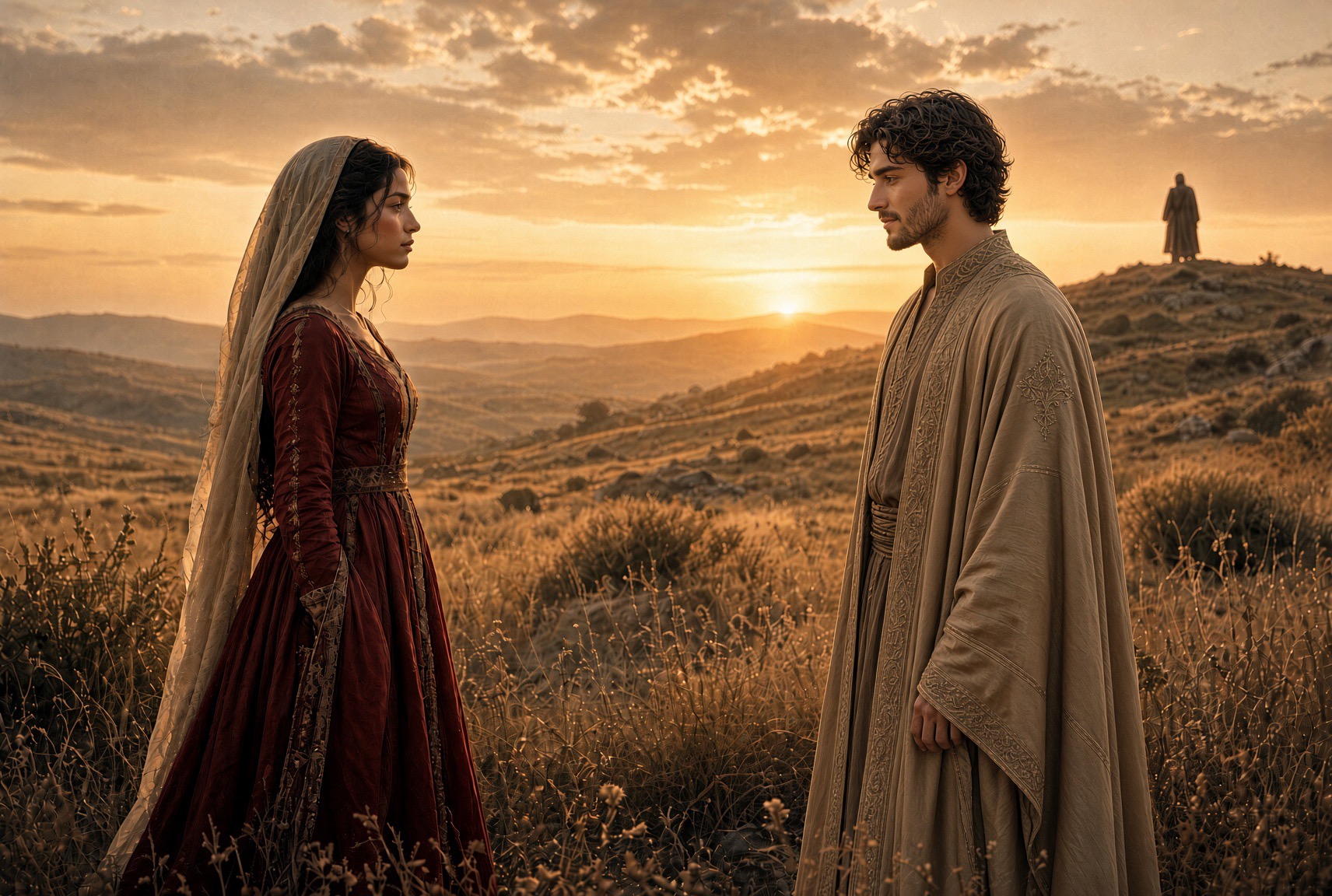
When we read the story of Eliezer seeking a wife for Isaac, we might think it is merely an ancient tale about marriage.
Yet the parasha presents us with something far deeper: a guide for making important decisions without losing the balance between trust in Hashem and personal responsibility.
Abraham does not send his servant simply to find a bride. He sends him to seek a woman whose values are compatible with those of the family he is helping to build.
Eliezer accepts the mission, but before taking a single step, he prays.
He does not demand miracles.
He does not try to control the outcome.
He does not seek to manipulate circumstances.
He asks for direction.
Then he observes.
By the well he proposes a simple test: the young woman who offers water not only to him but also to his camels will reveal a fundamental quality: kindness.
And when Rebecca appears, something extraordinary happens.
No one forces her.
No one decides for her.
No one interprets the “divine will” to impose a destiny upon her.
They ask her:
“Will you go with this man?”
And she answers:
“I will go.”
Application for Our Time
We live in an era obsessed with controlling outcomes.
Some people seek answers in horoscopes, readings, spells, bindings, or various ways of manipulating what they cannot control.
The Torah proposes exactly the opposite.
Instead of forcing, trust.
Instead of manipulating, discern.
Instead of controlling people, respect their free will.
Rebecca’s choice was not born of pressure, but of freedom.
And perhaps that is one of the most relevant lessons of this parasha: the strongest relationships are not built on control, but on shared values, good character, and decisions made freely.
Eliezer did his part.
Abraham did his part.
Rebecca did her part.
And Hashem did His.
The story reminds us that authentic faith does not consist of waiting passively nor of trying to control the future. It consists of walking with trust, acting with wisdom, and leaving space for Hashem’s will to manifest without annulling the freedom that He Himself granted to the human being.
THE DEPARTURE OF ABRAHAM
“His sons Isaac and Ishmael buried him.”
And perhaps one of the most beautiful images of the parasha is this: Isaac and Ishmael, separated by different paths for years, meet again to bid farewell to their father.
Two brothers.
Two different stories.
One same father.
A final act of honor.
Final Reflection
It is interesting to observe that the parasha begins with Sarah’s departure and ends with Abraham’s departure.
It might appear to be a story marked by death. Yet when we read it carefully, we discover exactly the opposite.
Between these two farewells, life unfolds.
Abraham weeps for Sarah, but he rises.
He purchases Machpelah.
He seeks a wife for Isaac.
He ensures the continuity of the family.
He prepares the next generation.
Then his own departure arrives.
And when he finally leaves this world, he leaves behind far more than possessions.
He leaves a legacy.
The Torah shows us that faith does not consist of avoiding tears.
Abraham wept for Sarah.
He mourned the companion of a lifetime.
He felt her absence.
But he also understood that he still had a responsibility ahead:
To secure the future of Isaac, the son of the promise, the son of the miracle, the son born of his union with Sarah.
Before thinking of himself, he made sure the next generation was prepared to continue the legacy.
Perhaps because for the Torah a life does not end when a person departs, but when they cease to influence those who come after.
Sarah continues present in Isaac.
In Rebecca.
In Abraham.
And in every generation that continues the promise.
Hashem continues writing new chapters of life even when we believe we have reached the end of the story.

