
History teaches us that peace is never a final achievement, but a continuous task. To understand the challenges of our present, it is worth looking toward a singular month: November.
I. November: Memory and the Lesson of Time
November has always been a month of turning points. When we look at history through the lens of learning, we see that this month gathers milestones in which human will demonstrated that dialogue and unity are always possible:
The Fall of the Berlin Wall: Living testimony that no ideological or concrete division can permanently extinguish the human longing for freedom and reunion.
The End of the First World War: The moment when the weapons fell silent so that diplomacy and the inestimable value of peace could take their place.
The Birth of the European Union: Historical proof that former rival nations were able to transform their wounds into a community of shared destiny, law, and prosperity.
The Lesson of Nature
In this same month, while political borders grow tense, the Earth offers us a sublime lesson in harmony. The great journey of the common cranes, the migration of the snow geese, and the passage of the monarch butterflies cross entire continents. They carry no passports and obey no ideologies; they travel united by the instinct of life and the balance of the planet.
The Light in the Hebrew Calendar
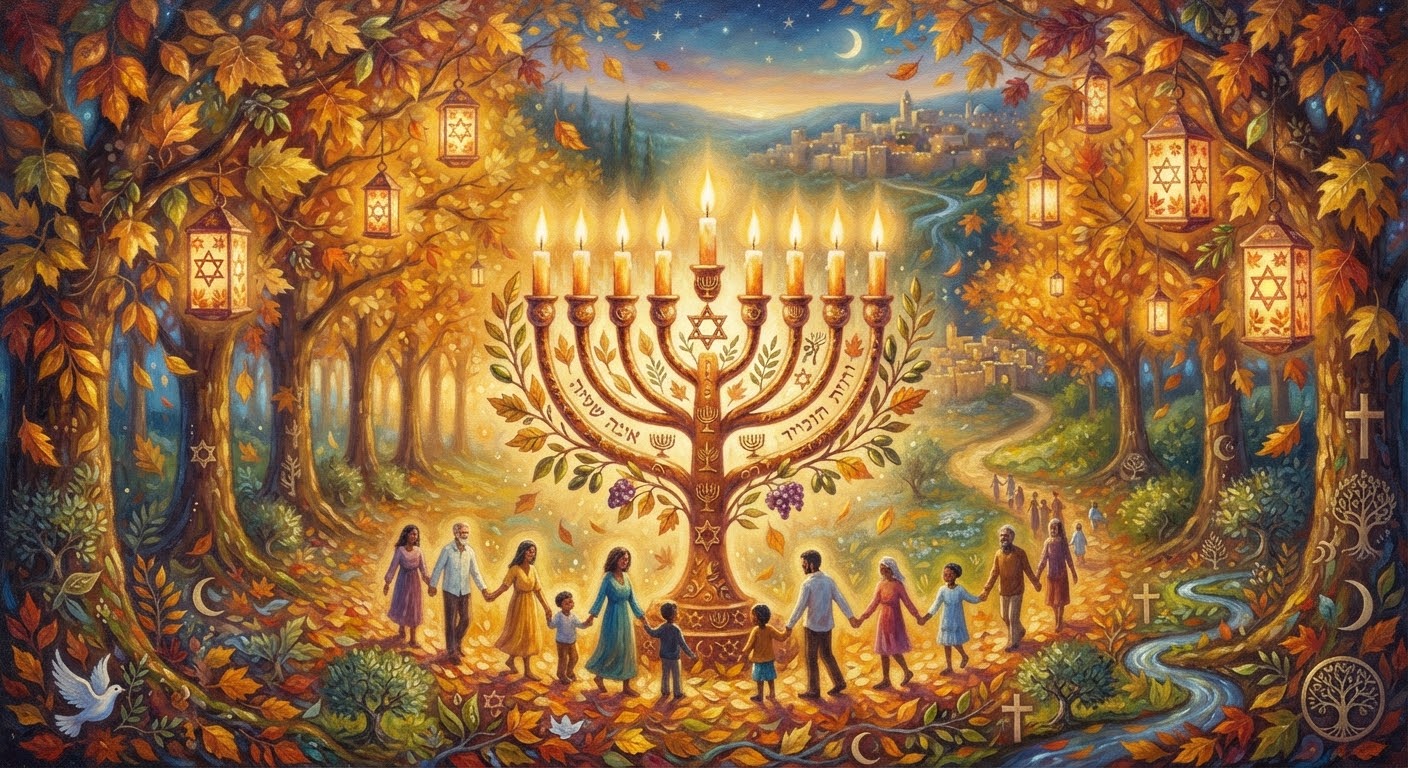
In Jewish tradition and culture, guided by its lunisolar calendar, November embraces the months of Cheshvan and Kislev. It is the threshold of Hanukkah, the Festival of Lights and of the Miracle. It is the millennial reminder that, even in the darkest moments, kindling a small flame with faith and resolve is enough to drive away the darkness.
II. Diagnosis of the Present: Global Challenges in November 2026
We cannot speak of hope without looking clearly and responsibly at the reality of our days:
Political Scenarios in Transition: Governments assuming new mandates amid profound social expectation, as in Israel and the United States, call for leadership with a vision of the state.
Peace Dialogues in Suspense: The trilateral conversations among the United States, Ukraine, and Russia require, more than ever, the prevalence of diplomacy over confrontation.
The Vulnerability of Digital Infrastructure: The global alert concerning the protection of submarine telecommunications cables in critical zones such as the Persian Gulf reminds us of the fragility of our worldwide interconnection and the urgency of preserving communication among peoples.
Prevention and Civic Resilience: More than 30 nations, including Canada, the United Kingdom, Sweden, Norway, and Germany, have activated civic preparedness programs (“Be Ready”). These measures of stockpiling do not arise from uncertainty or fear, but from a conscious culture of resilience in the face of climatic or cyber contingencies.
Social Cohesion and Cultural Respect: The preservation of our communal identity and sacred respect for traditions—observed both in the rigor of European nations such as Poland and in the veneration of sacred spaces in Japan—teach us that peaceful coexistence requires equity, order, and respectful integration.
Cyber Defense and Electoral Truthfulness: Technology must be the guarantor, not the threat, of the popular will. Stopping massive disinformation and algorithmic bias is indispensable for restoring citizens’ full trust in democracy.
The South American Pantry and Food Sovereignty: South America, the historic granary of the world, faces the challenge of balancing its vocation for export with internal well-being, ensuring that the abundance of the land reaches, first of all, the homes of its own people.
III. The Responsibility of the Individual: Conscious Resilience
The future of our nations is not decided solely in presidential offices; it is built every day from the home and the community. Assuming our individual responsibility means:
1. Prudence and Family Resilience: Following guidelines of prevention and responsible stockpiling as a civic duty of solidarity, avoiding panic and protecting the community.
2. Proximity Consumption: Supporting our farmers, regional cooperatives, and local markets to strengthen the economy of our own land.
3. Community Cohesion and Social Peace: Replacing polarization with dialogue, protecting our neighborhoods and shared cultural values.
4. Digital Hygiene: Verifying information before sharing it, becoming active shields against disinformation and campaigns of polarization.
IV. The Global Bank of Ideas: A Proposal for the Future
I propose the articulation of a Collective Civic Innovation Platform that connects the talent of students, scientists, farmers, and thinkers from the Americas, Europe, and the Middle East. A meeting space to:
• Optimize and protect the vital resources of water and energy at the local scale.
• Design community networks of solidary response in the face of emergencies.
• Promote the eradication of isolation among our most vulnerable sectors.
Conclusion:
“When nations listen to one another and citizens care for their neighbors, peace ceases to be a longing and becomes our common path. In this month of November, let us kindle the light of understanding.”
“He shall judge between the nations, and shall rebuke many peoples; and they shall beat their swords into plowshares, and their spears into pruning hooks; nation shall not lift up sword against nation, neither shall they learn war any more.”
— Isaiah 2:4

