
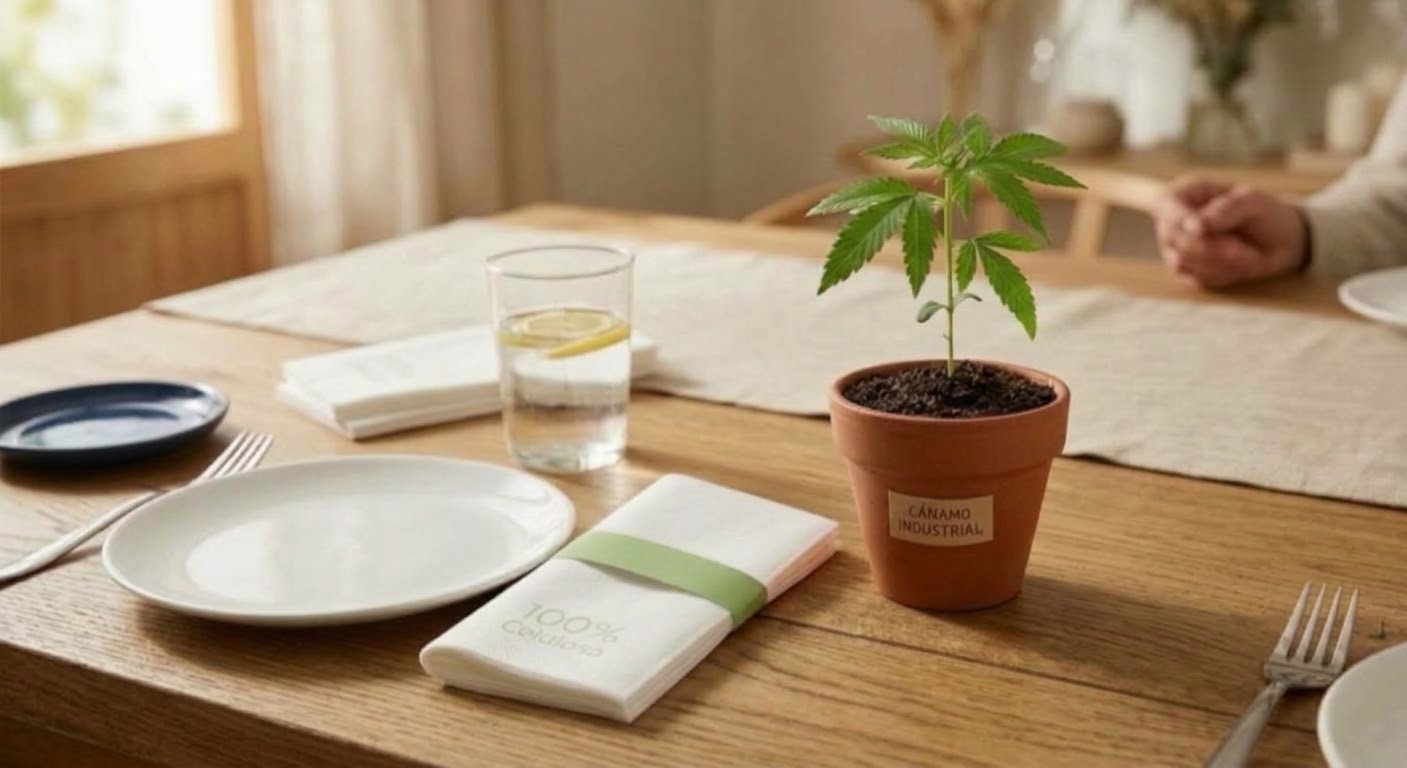
El verdadero desarrollo sostenible no es resignación: es innovación inteligente y ética.

Durante años nos han vendido una falsa elección: o protegemos la naturaleza o mantenemos la calidad de vida humana. Este “eslogan” lo considero una visión limitada.

La verdadera ecología no recicla lo sucio; innova con lo limpio.

Proteger la tierra jamás debe significar vulnerar la higiene ni la dignidad del ser humano, colocando en nuestra mesa familiar productos de reciclaje dudoso o insalubre.

El desafío ético actual es usar nuestra inteligencia industrial para cultivar alternativas nobles, versátiles y de rápido crecimiento —como el cáñamo, el bambú y el bagazo de caña— que entregan la máxima pulcritud sin talar un solo árbol.

Soberanía humana, salud y respeto ambiental pueden y deben caminar juntos. 

Alternativas nobles: El Cáñamo Industrial

Veamos algunas alternativas versátiles y renovables que pueden contribuir a la fabricación de servilletas y otros productos de papel, reduciendo drásticamente la presión sobre los recursos forestales.

Todo sobre el cultivo del Cáñamo

¿Cómo sembrarlo?: Se siembra mediante semillas seleccionadas en surcos bien drenados. Es una planta resistente que requiere muy poca agua en comparación con otros cultivos tradicionales. Además, al crecer de forma densa, ahoga las malas hierbas de manera natural, sin necesidad de pesticidas ni químicos agresivos.

¿Dónde adquirir la planta o semillas?: Se obtienen a través de proveedores agrícolas autorizados de semillas de cáñamo industrial (variedades certificadas con bajo o nulo contenido psicoactivo, destinadas estrictamente a la producción de fibra y celulosa).

Clima ideal: Es sumamente adaptable. Se desarrolla de manera óptima en climas templados y cálidos, con buena exposición solar y suelos bien oxigenados.

Tiempo de cosecha récord: ¡Es una de sus mayores ventajas ecológicas! Desde el momento de la siembra hasta que está listo para la cosecha pasan apenas entre 3 y 4 meses (a diferencia de un bosque de pinos o eucaliptos, que tarda décadas en madurar).

 El proceso de transformación: De la chacra al hogar

De la chacra al procesamiento: El agricultor cosecha los tallos y los traslada a centros de acopio o plantas de procesamiento primario cercanas, donde se extrae y desfina la fibra vegetal.

El modelo para el agricultor: Esto abre una oportunidad gigante para que los productores locales no solo vendan la materia prima en bruto, sino que se integren en la cadena de valor, generando ingresos dignos y sostenibles.

La maquinaria final: Mediante procesos industriales limpios y ecológicos, esta fibra se convierte en bobinas de papel tissue de textura suave, blanca e higiénica. Estas bobinas quedan listas para alimentar las máquinas cortadoras y gofradoras que fabrican las servilletas de uso diario.

 Una opción digna, limpia y 100 % respetuosa de nuestra naturaleza y de nuestros hogares.

True Sustainable Development Is Not Resignation: It Is Smart, Ethical Innovation

For years, we have been sold a false choice: either we protect nature or we maintain the human quality of life. I consider this “slogan” a narrow and limited view.

True ecology does not recycle what is dirty; it innovates with what is clean.

Protecting the earth must never mean compromising human hygiene or dignity by placing products of questionable or unsanitary recycling practices on our family tables.

Today’s ethical challenge is to use our industrial intelligence to cultivate noble, versatile, and fast-growing alternatives—such as hemp, bamboo, and sugarcane bagasse—that deliver maximum purity without felling a single tree from our forests.

Human sovereignty, health, and environmental respect can and must walk hand in hand.

Noble Alternatives: Industrial Hemp

Let us look at some versatile and renewable alternatives that can contribute to the manufacturing of napkins and other paper products, drastically reducing pressure on forest resources.

All About Growing Hemp

 How to plant it?: It is sown using selected seeds in well-drained furrows. It is a resilient plant that requires very little water compared to traditional crops. Furthermore, because it grows densely, it naturally smothers weeds without the need for pesticides or harsh chemicals.

 Where to acquire the plant or seeds?: Seeds are obtained through authorized agricultural suppliers of industrial hemp seeds (certified varieties with low to zero psychoactive content, strictly intended for fiber and cellulose production).

 Ideal climate: It is highly adaptable. It thrives in temperate and warm climates with good sun exposure and well-aerated soils.

 Record harvest time: This is one of its greatest ecological advantages! From planting to harvest, it takes only 3 to 4 months (unlike a pine or eucalyptus forest, which takes decades to mature).

The Transformation Process: From the Farm to the Home

 From the farm to processing: The farmer harvests the stalks and transports them to nearby collection centers or primary processing plants, where the plant fiber is extracted and refined.

 The model for the farmer: This opens up a massive opportunity for local growers to not only sell raw materials, but to integrate directly into the value chain, generating dignified and sustainable income.

 The final machinery: Through clean and eco-friendly industrial processes, this fiber is converted into tissue paper jumbo rolls with a soft, white, and hygienic texture. These rolls are then ready to feed the cutting and embossing machinery that produces daily-use napkins.

A dignified, clean option that is 100% respectful of our nature and our homes.