
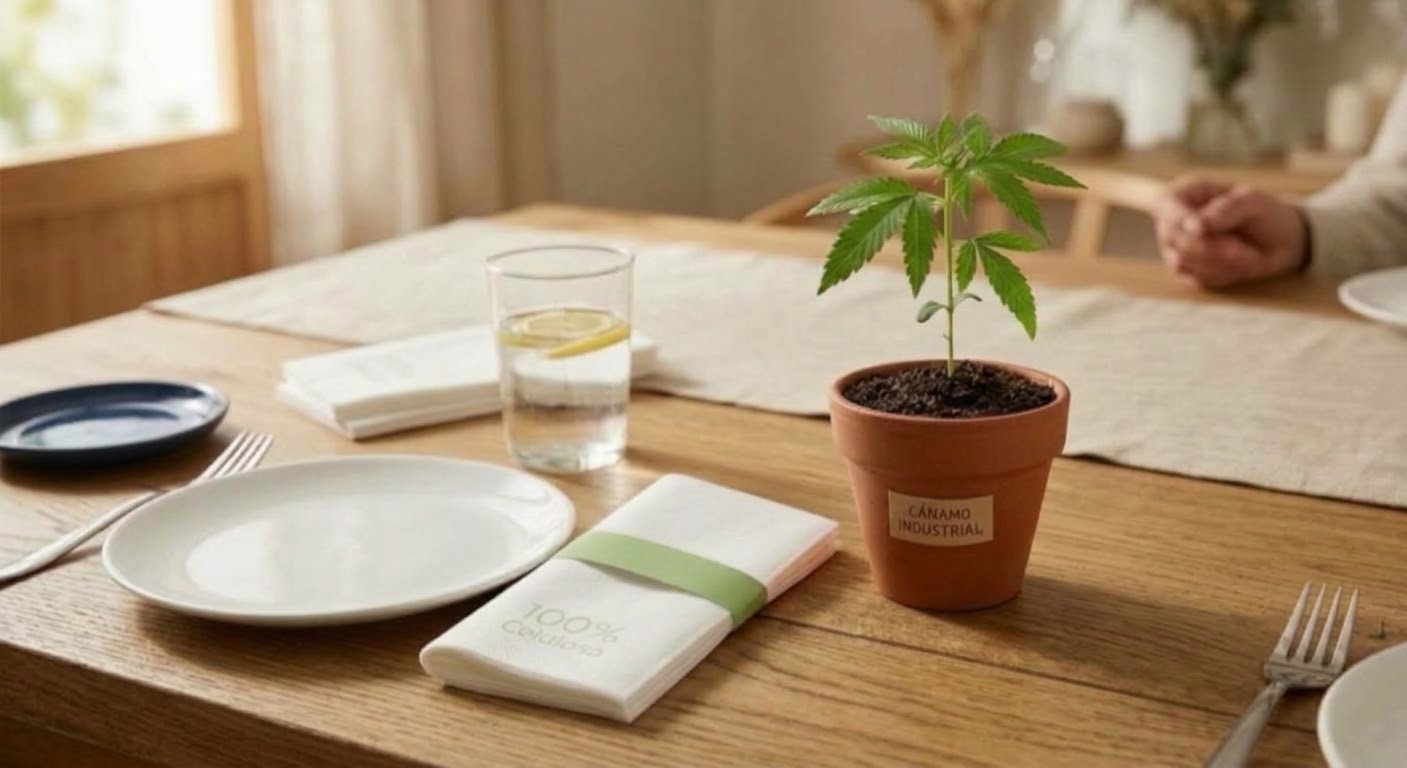
For years, we have been sold a false choice: either we protect nature or we maintain the human quality of life. I consider this “slogan” a narrow and limited view.
True ecology does not recycle what is dirty; it innovates with what is clean.
Protecting the earth must never mean compromising human hygiene or dignity by placing products of questionable or unsanitary recycling practices on our family tables.
Today’s ethical challenge is to use our industrial intelligence to cultivate noble, versatile, and fast-growing alternatives—such as hemp, bamboo, and sugarcane bagasse—that deliver maximum purity without felling a single tree from our forests.
Human sovereignty, health, and environmental respect can and must walk hand in hand.
Noble Alternatives: Industrial Hemp
Let us look at some versatile and renewable alternatives that can contribute to the manufacturing of napkins and other paper products, drastically reducing pressure on forest resources.
All About Growing Hemp
How to plant it?: It is sown using selected seeds in well-drained furrows. It is a resilient plant that requires very little water compared to traditional crops. Furthermore, because it grows densely, it naturally smothers weeds without the need for pesticides or harsh chemicals.
Where to acquire the plant or seeds?: Seeds are obtained through authorized agricultural suppliers of industrial hemp seeds (certified varieties with low to zero psychoactive content, strictly intended for fiber and cellulose production).
Ideal climate: It is highly adaptable. It thrives in temperate and warm climates with good sun exposure and well-aerated soils.
Record harvest time: This is one of its greatest ecological advantages! From planting to harvest, it takes only 3 to 4 months (unlike a pine or eucalyptus forest, which takes decades to mature).
The Transformation Process: From the Farm to the Home
From the farm to processing: The farmer harvests the stalks and transports them to nearby collection centers or primary processing plants, where the plant fiber is extracted and refined.
The model for the farmer: This opens up a massive opportunity for local growers to not only sell raw materials, but to integrate directly into the value chain, generating dignified and sustainable income.
The final machinery: Through clean and eco-friendly industrial processes, this fiber is converted into tissue paper jumbo rolls with a soft, white, and hygienic texture. These rolls are then ready to feed the cutting and embossing machinery that produces daily-use napkins.
A dignified, clean option that is 100% respectful of our nature and our homes.

