
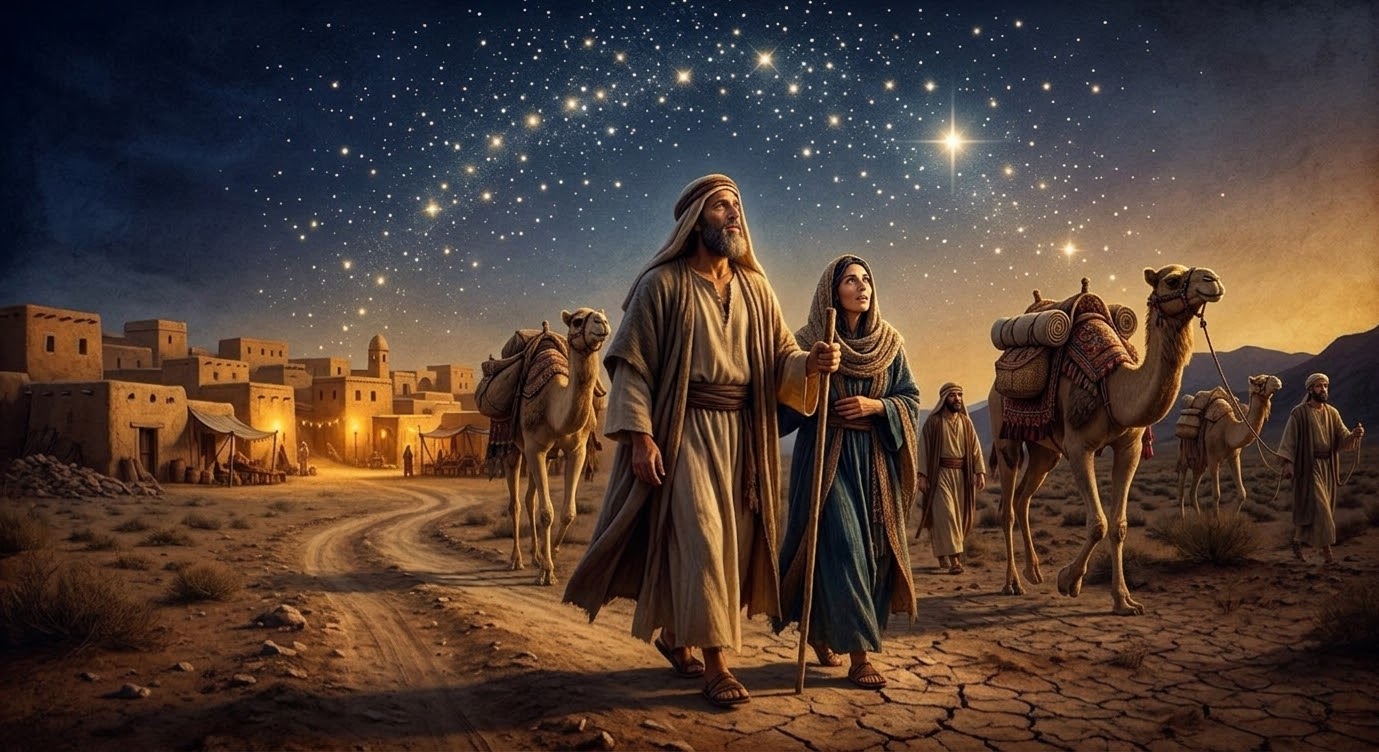
Lecha Lecha – The Journey Toward Your True Self

Shabbat, October 24, 2026 | 13 Cheshvan 5787

A reflection on Abraham’s call, faith in times of uncertainty, integrity, divine provision, and the purpose the Eternal reveals to those who dare to walk with Him.

Parasha Readings:

Genesis 12:1–17:27

Haftorah:

Isaiah 40:27–41:16

Introduction: “Go Toward Yourself”

The divine command that opens this portion is one of the most transformative in the entire Torah:

“Lech Lecha” (לֶךְ־לְךָ).

It does not simply mean “go.” It can also be understood as “go for yourself,” “go toward yourself,” or “set out on the path toward the person you are meant to become.”

The Eternal calls Abram to leave his land, his birthplace, and his father’s house. He asks him to leave behind everything that had until then defined his identity.

As Rabbi Jonathan Sacks z”l taught, only one who is willing to be different can encounter the One God. Only one who dares to detach from inherited identities can discover the identity the Creator has reserved for him.

Often, to truly find ourselves, we must distance ourselves from the voices that shaped us, from others’ expectations, and from the attachments that limit our spiritual growth.

Why Was Abram Chosen?

The Torah does not give an explicit explanation of why Abram was chosen. Yet the Midrash offers a window into his character.

From a young age, Abram questioned the idolatry of his surroundings. He observed how people worshiped images and forces of nature, and he wondered whether behind all of creation there existed a single Creator.

While most accepted the beliefs of their time without questioning them, Abram sought the truth.

Perhaps it was precisely that sincere search that prepared him to hear the divine call.

To become the father of a new nation and bearer of a new spiritual vision, he first had to be separated from an environment that could hinder the development of his mission.

That is why the first words he hears are an invitation to leave.

The Call and the Promises

The Eternal said to him:

“Go from your land, from your relatives, and from your father’s house to the land that I will show you” (Genesis 12:1).

And along with the call came extraordinary promises:

“I will make of you a great nation.

I will bless you.

I will make your name great.

You shall be a blessing.”

And it continues:

“I will bless those who bless you, and him who dishonors you I will curse; and in you all the families of the earth shall be blessed” (Genesis 12:2–3).

With the perspective of centuries, it is astonishing to contemplate these words. Jews, Christians, and Muslims recognize Abraham as a foundational figure of their spiritual heritage. In one way or another, billions of people look toward the God of Abraham.

Yet Abram saw none of that.

He did not see a nation.

He did not see descendants.

He did not see a land in his possession.

He did not see the fulfillment of any of the promises.

He only had a voice and an invitation to trust.

And still, he believed.

That is why, upon arriving at Shechem and later between Bethel and Ai, he built altars to the Eternal. Before receiving the fulfillment, he offered worship. Before seeing the results, he expressed gratitude. Before seeing the blessing, he chose to walk in faith.

In this lies one of the deepest teachings of Lech Lecha: authentic faith does not depend on the visible landscape, but on trust in the Word that called us.

The Descent to Egypt: Integrity in the Midst of a Corrupt Culture

Shortly after arriving in the promised land, Abram faces an unexpected reality: a severe famine forces him to go down to Egypt.

There he encounters a society where power and desire could override justice and human dignity. Fearing for his life because of Sarai’s beauty, Abram perceives the danger of an environment where some men were even willing to eliminate a husband in order to take a woman.

The situation culminates with divine intervention. Pharaoh takes Sarai into his house, but the Eternal sends great plagues upon him and his household until the truth comes to light.

The narrative reminds us of a fundamental truth:

God sees what happens behind closed doors.

Human beings can hide intentions, manipulate appearances, and justify conduct, but nothing escapes the gaze of the Eternal.

Has the Human Heart Really Changed?

Perhaps we no longer live in a time when the powerful openly eliminate a man to take his wife. Yet the root of the problem remains.

The seduction of committed people, the deliberate breaking of marriages, infidelity disguised as romance, or the obsessive pursuit of what belongs to another continue to be modern expressions of an ancient inclination of the human heart.

Often, what attracts is not only physical beauty. Stability, integrity, fidelity, or the virtues one observes in another person can also attract.

But there is a profound contradiction in desiring a person precisely for their fidelity while attempting to destroy the fidelity that characterizes them.

If what is admirable is their commitment, what remains of that virtue once that commitment has been betrayed?

David and Bathsheba: When Desire Ignores Boundaries

Scripture offers another powerful example in the story of King David and Bathsheba.

To confront his sin, the prophet Nathan told him a parable:

“There were two men in a certain city, one rich and the other poor. The rich man had very many flocks and herds, but the poor man had nothing but one little ewe lamb, which he had bought…” (2 Samuel 12:1–4).

Despite possessing abundance, the rich man took the poor man’s only lamb. Then Nathan revealed the true meaning of the story to the king:

“You are the man!” (2 Samuel 12:7).

David had taken Uriah’s wife and caused his death. As a consequence, Nathan announced to him:

“The sword shall never depart from your house” (2 Samuel 12:10).

The lesson is sober but necessary: divine forgiveness may be available to one who sincerely repents, but that does not automatically eliminate all the consequences of our actions.

A Warning for Our Generation

Both in Egypt and in the episode of David, Scripture reminds us that the real problem is not beauty, nor wealth, nor power.

The problem begins when a human being believes he has the right to take what God has not given him.

Lech Lecha invites us to walk by faith, trusting that the Eternal is able to provide exactly what we need. Greed is born when we stop trusting in His provision and begin to reach for what belongs to another.

But the Torah reminds us of a truth that runs through all of biblical history:

Nothing is hidden before the Eternal. He sees faithfulness. He sees injustice. He sees the decisions that no one else knows. And He is the Judge of all the earth.

The Deeper Meaning of the Famine and the Land

1. The Ten Famines of the Midrash and Abraham’s Test

In the Torah and the Tanakh, famine does not appear as a chance event or an exclusively climatic occurrence.

The Midrash teaches that human history is marked by ten great famines that accompany decisive moments of spiritual transformation:

1. In the days of Adam, after the fall.

2. In the days of Lamech, father of Noah.

3. In the days of Abraham (Genesis 12:10).

4. In the days of Isaac (Genesis 26:1).

5. In the days of Jacob (Genesis 41:54).

6. In the time of the Judges (Ruth 1:1).

7. In the days of King David (2 Samuel 21:1).

8. In the days of the prophet Elijah (1 Kings 17:1).

9. In the days of the prophet Elisha (2 Kings 6:25).

10. The future famine announced by Amos (8:11), which will not be a hunger for bread or a thirst for water, but a hunger to hear the Word of the Eternal before the redemption.

Within this sequence, the famine Abraham faces holds a singular meaning.

Barely arrived in the land God had promised him, he finds not abundance, but scarcity. Reality seems to contradict the promise.

There appears the nisayon the spiritual test.

Would Abraham trust only when circumstances were favorable, or would he remain firm even when immediate experience seemed to deny what had been promised to him?

The true test was not the hunger itself, but faithfulness in the midst of uncertainty.

2. The Land as a Mirror of the Soul

The Torah presents a deeply relational vision of Creation. The land is not a passive stage upon which human history unfolds; it participates in it and responds to the conduct of those who inhabit it.

The Psalmist declares:

“He turns rivers into a desert, springs of water into thirsty ground, a fruitful land into a salty waste, because of the evil of its inhabitants” (Psalm 107:33–34).

Likewise, the prophet Isaiah warns:

“The earth is defiled under its inhabitants; for they have transgressed the laws, violated the statutes, broken the everlasting covenant” (Isaiah 24:5)

From this biblical perspective, there is a direct connection between the moral dimension of the human being and the vitality of the land.

When the balance between responsibility, gratitude, and respect for Creation is broken, the relationship with the source of our sustenance also deteriorates.

Modern agriculture has achieved extraordinary accomplishments, yet at the same time it faces increasingly complex challenges: soil degradation, loss of biodiversity, dependence on monocultures, and the appearance of resistant pests.

These phenomena invite reflection on the need for a more balanced relationship with the land—one that integrates not only productive efficiency, but also wisdom, responsibility, and care.

The Great Irish Famine of the nineteenth century is often cited as a historical lesson about the risks of excessive dependence on a single crop. Beyond its multiple causes, it demonstrates how the fragility of food systems can become evident when diversity and resilience disappear.

3. The Silent Cry of the Field and the Paradox of Our Time

Our generation faces a disturbing paradox. While agricultural technology reaches unprecedented levels, many fertile regions lose cultivable land each year due to urban expansion and disorderly growth.

In countries traditionally blessed with agricultural abundance, such as Peru, extensions of fertile soil are being replaced by urbanizations and real-estate developments.

At the same time, a significant part of production is oriented toward external markets, while local consumers experience rising prices and greater dependence on complex supply chains.

It is not necessarily a matter of immediate scarcity, but of signals that invite reflection.

Like waters that recede before a great wave, certain changes may seem insignificant when they occur gradually. Yet they remind us of the importance of valuing that which sustains life before its absence becomes evident.

4. A Message for Our Generation: Restoring the Bond with the Land

The same Psalm that describes desolation also contains a promise:

“He turns a desert into pools of water, a parched land into springs of water” (Psalm 107:35).

Restoration begins with people.

In contrast to Abraham, who went down to Egypt during the famine, Isaac received the instruction to remain in the land. There he sowed and reaped a hundredfold (Genesis 26:12).

His example teaches that even in times of uncertainty there can be blessing when one works with perseverance, responsibility, and trust.

Perhaps the call for our generation is to rebuild a more conscious relationship with the sources of our sustenance:

 Promote family and community gardens.

 Recover green spaces on balconies, terraces, and urban areas.

 Support local producers committed to responsible practices.

 Value seasonal foods and reduce waste.

 Educate new generations about the origin and care of food.

Returning to touch the land with gratitude is not merely an ecological gesture; it is a spiritual act. It is recognizing that abundance should never be taken for granted and that true tikkun begins when we restore our relationship with the Creator, with the land, and with one another.

Abraham’s famine reminds us that tests do not always arrive as an absence of resources. Sometimes they arrive as a silent question: Will we continue to trust and build even when we still do not see the fulfillment of the promise?

The Danger of Human Attachment and Subtle Disobedience

The biblical account lets us see a seemingly small detail, yet one full of meaning. When the Eternal calls Abram, He says:

“Go from your land, from your relatives, and from your father’s house” (Genesis 12:1).

Yet, shortly afterward, the Torah adds that Lot went with him.

At first glance, it seems like a secondary fact, but Scripture invites us to observe these details carefully.

Often, moved by affection, compassion, or family bonds, we take with us people, burdens, or influences that the Eternal did not ask us to carry.

It is not necessarily something bad; in fact, it usually arises from the best feelings. However, partial obedience remains incomplete obedience.

It is striking that divine revelation reaches a new intensity precisely after the separation between Abram and Lot. Once Lot departs, the Eternal speaks to Abram again and shows him the full extent of the promised land (Genesis 13:14–17).

The narrative seems to suggest that there are moments in which spiritual growth requires letting go of that which, although we deeply appreciate it, is no longer part of our calling.

Abram’s Generosity and Lot’s Choice

After returning from Egypt, both Abram and Lot had prospered considerably. Their flocks, servants, and possessions grew to the point that the land could no longer support them together.

As a result, disputes arose between the herdsmen of Abram and those of Lot.

Faced with that situation, Abram acted with extraordinary nobility. Instead of imposing his authority as patriarch of the family or claiming privileges by age and leadership, he proposed a peaceful separation:

“Let there be no strife between you and me, and between your herdsmen and my herdsmen, for we are kinsmen” (Genesis 13:8).

And then he made a surprising gesture:

“If you take the left hand, then I will go to the right, or if you take the right hand, then I will go to the left” (Genesis 13:9).

Abram gave Lot the privilege of choosing first.

Here we cannot help reflecting on Lot’s response.

Perhaps he could have said: ‘No, uncle. You are the one who received the Eternal’s call. You choose first and I will take the remaining path.” It would have been a response of gratitude, humility, and recognition toward the one who had welcomed and accompanied him.

Yet Lot lifted up his eyes and chose for himself the plain of the Jordan, a region that appeared fertile and abundant “like the garden of the Eternal.” His decision was guided by what he saw.

Abram, by contrast, walked by what he had heard.

One evaluated the visible landscape; the other trusted the invisible promise. And perhaps there we find one of the great spiritual differences between the two men.

Financial Integrity and Trust in the Only Provider

After rescuing Lot from the war between the kings, Abram stands before two figures who represent very different paths.

On one hand appears Melchizedek, king of Salem and priest of God Most High, who comes out to meet him with bread and wine and pronounces a blessing over him. In response, Abram gives him a tenth of everything.

On the other hand, the king of Sodom offers him to keep the goods recovered during the battle.

Abram’s response constitutes an extraordinary lesson in spiritual integrity:

“I will take nothing, from a thread to a sandal strap, of all that is yours, lest you should say, ‘I have made Abram rich’” (Genesis 14:23).

Abram understood that accepting that wealth could create a mistaken perception about the origin of his prosperity. He did not want the glory that belonged to the Eternal to end up attributed to an earthly king.

His attitude reveals a deep trust in the Only Provider. Abram knew that the One who had called him was also able to sustain him.

Who Receives the Credit?

This teaching remains relevant for our generation.

There is often the temptation to attribute our success exclusively to contacts, influences, economic power, favorable circumstances, or personal abilities. Without denying the value of human effort, faith invites us to remember that every opportunity, capacity, and resource has its ultimate source in the Eternal.

When we recognize the true origin of blessings, we act with humility and gratitude. We understand that we are stewards and not absolute owners.

Abram did not reject wealth because he despised material goods—he was a prosperous man. What he rejected was any dependence that could compromise his testimony or allow another to claim credit for what God had promised to do.

The lesson is profound: integrity consists not only in how we obtain resources, but also in carefully guarding to whom we attribute the provision.

Whoever knows the true Provider can receive with gratitude, administer with responsibility, and walk with the freedom of knowing that his sustenance does not depend solely on men, but on the One who sustains all things.

Have We Lost the Capacity to Recognize What Is Pure?

The destruction of Sodom constitutes one of the most forceful warnings in the entire Torah about the effects of collective moral corruption.

Scripture describes a society so degraded that it had lost the capacity to distinguish between good and evil, between hospitality and abuse, between human dignity and exploitation.

It is significant that when the heavenly visitors arrive in the city, the inhabitants perceive nothing extraordinary in them. Their hearts were so hardened that they could not recognize that which came from God.

This reality invites reflection on our own time.

We often observe how integrity arouses suspicion rather than admiration. A woman who chooses to live with modesty, prudence, or reserve may become the object of speculation and mockery. Likewise, an upright man who refuses to engage in fleeting adventures or compromise his principles may be treated as someone strange or out of place.

It seems that, at times, society finds it easier to understand corruption than virtue.

When fidelity becomes a reason for ridicule and purity seems incomprehensible, it is worth asking ourselves: Are we losing the capacity to recognize the good when we have it before us?

The story of Sodom reminds us that a society begins to deteriorate seriously when it stops admiring righteousness and begins to consider integrity strange.

Do Not Look Back: The Lesson of Lot’s Wife

Among the most striking scenes of this portion is the story of Lot’s wife.

While the angels led the family out of Sodom, the instruction was clear:

Do not look back.

Yet she turned her gaze toward what she was leaving behind and became a pillar of salt.

Beyond the event itself, the account contains a permanent teaching for our lives.

A driver who keeps his eyes fixed on the rearview mirror ends up losing sight of the road ahead. The mirror fulfills an important function, but it was not designed to direct our destiny.

In the same way, the past has value as a reference, but not as a residence.

 We can learn from our mistakes.

 We can remember the lessons of the journey.

 We can analyze decisions so as not to repeat old imbalances.

But we cannot live anchored to what was left behind.

Excessive nostalgia, resentment, guilt, and unresolved wounds end up absorbing our energy and diverting our attention from present purpose.

No one is exempt from that temptation. Just as the immense gravitational force of a black hole attracts everything that comes too close, poorly managed memories can absorb our joy, our hope, and our capacity to move forward.

The angels’ instruction also contains another dimension: not to rejoice in the fall of the wicked, nor to remain contemplating divine judgment with an attitude of fascination.

The call was simple: leave and keep going.

They could not change what was happening behind them. Their responsibility was to obey and continue walking toward the life God was offering them.

The Visualization of the Promise and the Power of the Covenant

In chapter 15, we find Abram going through a deeply human concern. He has received extraordinary promises, yet he still has no son of his own.

Then the Eternal speaks to him:

Fear not, Abram; I am your shield, and your reward shall be very great.”

And then He leads him outside his tent, inviting him to lift his gaze:

“Look now toward heaven and count the stars, if you are able to count them… So shall your offspring be.”

The Torah reveals here a powerful pedagogical tool used by the Creator Himself: visualization.

It is not simply about positive thinking or imagining material desires.

God takes a visible reality and uses it to strengthen an invisible promise.

He had already told Abram that his descendants would be like the dust of the earth. Now He shows him the stars of heaven.

Look. Observe. Contemplate. Internalize.

Faith needs to take root in the heart, but it often also needs an image that reminds it.

It is interesting to observe that a large part of modern personal-growth programs constantly insist on concepts such as “Visualize,” “See yourself achieving your goal,” or “Believe in yourself.” Yet it is rarely mentioned that visualization appears much earlier in the Torah.

It was the Eternal who said: “Look at the stars,” “Look at the dust of the earth,” “Lift up your eyes,” and “Walk through the land.”

But there is a fundamental difference: biblical visualization was never centered solely on the acquisition of goods or personal fulfillment. It was always linked to divine purpose and inner transformation.

That is why, years later, the Eternal will say to him:

“Walk before Me and be blameless.”

That condition is usually absent in many modern versions of visualization. The promise was never separated from character.

Is It Wrong to Ask for a Sign?

Abram also asks a question: “How shall I know that I shall possess it?” In other words, he asks for a sign.

Reading this passage, we might ask ourselves: Would it not have been better simply to keep believing?

Perhaps. But the Torah does not hide the humanity of its protagonists. Even the father of faith had moments in which he sought confirmation.

And if we are honest, many of us have done exactly the same. How many times have we said: “Lord, give me a sign,” “Show me if I am on the right path,” or “Confirm what I am feeling”?

Far from rejecting Abram, God responds by establishing the Brit Bein HaBetarim—the Covenant Between the Pieces. There He reveals to him that his descendants will go through a long period of exile and affliction before returning to the promised land.

The teaching is profound: the promise does not eliminate the process. God shows the destination, but He also reveals the path that will be necessary to travel in order to reach it.

Hagar and Ishmael: Two Questions for Every Soul

Faced with Sarah’s barrenness, a solution born of human impatience arises. Hagar conceives, and the situation generates tensions that end up leading her into the desert.

It is there that one of the most moving encounters of the entire parashah occurs. The Angel of the Eternal finds her by a spring of water and asks her two apparently simple questions:

“Hagar, servant of Sarai, where have you come from and where are you going?”

These words transcend the historical moment; they are questions directed also to us:

 Where do we come from?

 Who are we?

 What stories, wounds, and decisions have brought us here?

 And where are we heading?

Because it is not enough to be in motion; we must also know where our steps are leading.

Although Ishmael’s future will be marked by conflicts, Hagar discovers something extraordinary in the midst of her pain. She recognizes that God has seen her in her affliction. That is why she calls the Eternal El Roi—“You are the God who sees me.”

What comfort that revelation contains.

Before others understand us, God sees us. Before anyone hears our cry, God hears it. Before we find answers, God already knows our questions.

The Supreme Covenant: Identity, Integrity, and Transformation

When Abram is ninety-nine years old, the Eternal reveals Himself to him as El Shaddai and gives him an instruction that summarizes all spiritual life:

“Walk before Me and be blameless.”

He does not ask for perfection; He asks for integrity. He asks him to walk consciously in His presence.

From that moment, three fundamental transformations occur:

1. The change of name: Abram becomes Abraham; Sarai becomes Sarah. The change of name symbolizes a change of identity and destiny. God does not only transform circumstances; He transforms people.

2. The Brit Milah: Circumcision is established as the eternal sign of the covenant between God and Abraham’s descendants. The covenant ceases to be only an inner experience and is expressed in a visible sign of commitment and belonging.

3. The promise of Isaac: Finally, God declares that the spiritual inheritance and the covenant will be established through the son who will be born of Sarah.

The promise seemed impossible: Abraham was one hundred years old, and Sarah was ninety. Yet precisely there, where human possibilities end, the power of the Eternal begins to be manifested.

And Abraham responds as he had done from the beginning: obeying. Without delay, without negotiating, without postponing. That same day he fulfills the command he received.

Just as Abraham was called to leave his land in order to discover his destiny, each of us is invited to leave something behind: a limited identity, a wound, a fear, a dependence, or an old version of ourselves. The call of Lech Lecha remains in force because the spiritual journey never ends.

Conclusion: We Are Not What We Possess, but What We Transmit

Abraham’s life teaches us that true greatness is not measured by what we accumulate, but by what we leave as a spiritual inheritance.

Abraham was prosperous, but his legacy is not his flocks. He was respected, but his legacy is not his prestige. His greatness resides in having responded to the call of the Eternal when he still could not see the end of the path.

Lech Lecha continues to resonate in every generation as a personal invitation:

 Go toward yourself.

 Go toward the person you were created to be.

 Leave behind that which limits your calling.

 Walk with integrity.

 Learn to trust when circumstances seem to contradict the promises.

And always remember that the greatest reward is not what we receive from God, but the possibility of walking with Him.

Because, in the end, the true promised land begins when a person decides to respond:

“Here I am.”
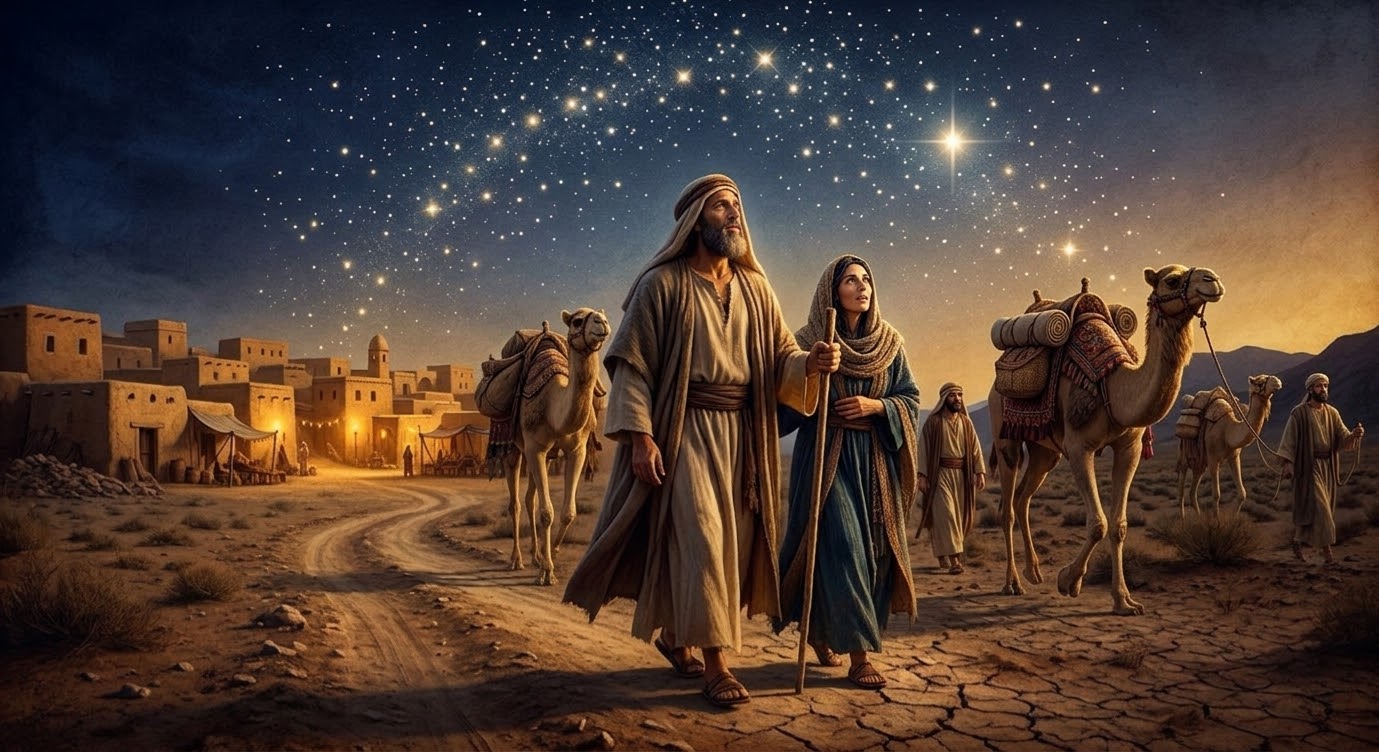
Lej Lejá – El Viaje Hacia Tu Verdadero Ser

Shabbat, 24 de octubre de 2026 | 13 de Jeshván de 5787

Una reflexión sobre el llamado de Abraham, la fe en tiempos de incertidumbre, la integridad, la provisión divina y el propósito que el Eterno revela a quienes se atreven a caminar con Él.


Lecturas de la Parasha:

Génesis 12:1-17:27

Haftorah:

Isaías 40:27-41:16


Introducción: “Ve Hacia Ti Mismo”

La orden divina que inaugura esta porción es una de las más transformadoras de toda la Torá:

“Lej Lejá” (לֶךְ־לְךָ).

No significa simplemente “vete”. Puede entenderse también como “ve para ti”, “ve hacia ti mismo” o “emprende el camino hacia la persona que estás destinado a ser”.

El Eterno llama a Abram a abandonar su tierra, su lugar de nacimiento y la casa de su padre. Le pide que deje atrás todo aquello que hasta entonces había definido su identidad.

Como enseñaba el Rabino Jonathan Sacks z”l, solo quien está dispuesto a ser diferente puede encontrarse con el Di-s Único. Solo quien se atreve a desprenderse de las identidades heredadas puede descubrir la identidad que el Creador le ha reservado.

A menudo, para encontrarnos verdaderamente, debemos alejarnos de las voces que nos moldearon, de las expectativas ajenas y de los apegos que limitan nuestro crecimiento espiritual.

¿Por Qué Fue Escogido Abram?

La Torá no presenta una explicación explícita sobre por qué Abram fue elegido. Sin embargo, el Midrash nos ofrece una ventana hacia su carácter.

Desde joven, Abram cuestionaba la idolatría de su entorno. Observaba cómo las personas adoraban imágenes y fuerzas de la naturaleza, y se preguntaba si detrás de toda la creación existiría un único Creador.

Mientras la mayoría aceptaba las creencias de su época sin cuestionarlas, Abram buscaba la verdad.

Quizás fue precisamente esa búsqueda sincera la que lo preparó para escuchar el llamado divino.

Para convertirse en el padre de una nueva nación y portador de una nueva visión espiritual, primero debía ser separado de un ambiente que podía impedir el desarrollo de su misión.

Por eso, las primeras palabras que escucha son una invitación a salir.

El Llamado y las Promesas

El Eterno le dijo:

“Vete de tu tierra, de tu parentela y de la casa de tu padre, hacia la tierra que te mostraré” (Génesis 12:1).

Y junto con el llamado llegaron promesas extraordinarias:

“Haré de ti una gran nación.
Te bendeciré.
Engrandeceré tu nombre.
Serás bendición.”

Y continúa:

“Bendeciré a los que te bendigan y a los que te maldigan maldeciré; y en ti serán benditas todas las familias de la tierra” (Génesis 12:2-3).

Con la perspectiva de los siglos, resulta asombroso contemplar estas palabras. Judíos, cristianos y musulmanes reconocen an Abraham como figura fundamental de su herencia espiritual. De una u otra manera, miles de millones de personas miran hacia el Di-s de Abraham.

Sin embargo, Abram no veía nada de eso.

No veía una nación.

No veía descendencia.

No veía una tierra poseída.

No veía el cumplimiento de ninguna de las promesas.

Solo tenía una voz y una invitación a confiar.

Y aun así, creyó.

Por eso, al llegar a Siquem y más tarde entre Bet-El y Hai, edificó altares al Eterno. Antes de recibir el cumplimiento, ofreció adoración. Antes de contemplar los resultados, expresó gratitud. Antes de ver la bendición, decidió caminar en fe.

En esto reside una de las enseñanzas más profundas de Lej Lejá: la fe auténtica no depende del paisaje visible, sino de la confianza en la Palabra que nos llamó.

La Bajada a Egipto: Integridad en Medio de una Cultura Corrupta

Poco después de llegar a la tierra prometida, Abram enfrenta una realidad inesperada: una severa hambruna lo obliga a descender a Egipto.

Allí se encuentra con una sociedad donde el poder y el deseo podían imponerse sobre la justicia y la dignidad humana. Temiendo por su vida debido a la belleza de Sarai, Abram percibe el peligro de un ambiente donde algunos hombres estaban dispuestos incluso a eliminar a un esposo para apoderarse de una mujer.

La situación culmina con la intervención divina. El Faraón toma a Sarai para su casa, pero el Eterno envía grandes plagas sobre él y su familia hasta que la verdad sale a la luz.

La narrativa nos recuerda una verdad fundamental:

Di-s ve lo que sucede detrás de puertas cerradas.

Los seres humanos pueden ocultar intenciones, manipular apariencias y justificar conductas, pero nada escapa a la mirada del Eterno.

¿Ha Cambiado Realmente el Corazón Humano?

Quizás ya no vivimos en una época donde los poderosos eliminan abiertamente a un hombre para tomar a su esposa. Sin embargo, la raíz del problema sigue existiendo.

La seducción de personas comprometidas, la ruptura deliberada de matrimonios, la infidelidad disfrazada de romance o la persecución obsesiva de aquello que pertenece a otro continúan siendo expresiones modernas de una antigua inclinación del corazón humano.

Con frecuencia, lo que atrae no es solamente la belleza física. También pueden atraer la estabilidad, la integridad, la fidelidad o las virtudes que alguien observa en otra persona.

Pero existe una profunda contradicción en desear a una persona precisamente por su fidelidad mientras se intenta destruir la fidelidad que la caracteriza.

Si aquello que resulta admirable es su compromiso, ¿qué queda de esa virtud una vez que dicho compromiso ha sido traicionado?

David y Betsabé: Cuando el Deseo Ignora los Límites

La Escritura ofrece otro poderoso ejemplo en la historia del rey David y Betsabé.

Para confrontar su pecado, el profeta Natán le relató una parábola:

“Había dos hombres en una ciudad; uno rico y otro pobre. El rico tenía muchas ovejas y ganado. Pero el pobre no tenía más que una pequeña cordera que había criado como una hija…” (2 Samuel 12:1-4). 

A pesar de poseer abundancia, el hombre rico tomó la única cordera del pobre. Entonces Natán reveló el verdadero significado de la historia al rey:

“¡Tú eres aquel hombre!” (2 Samuel 12:7). 

David había tomado la esposa de Urías y provocado su muerte. Como consecuencia, Natán le anunció:

“La espada nunca se apartará de tu casa” (2 Samuel 12:10). 

La lección es sobria pero necesaria: el perdón divino puede estar disponible para quien se arrepiente sinceramente, pero eso no elimina automáticamente todas las consecuencias de nuestros actos.

Una Advertencia para Nuestra Generación

Tanto en Egipto como en el episodio de David, la Escritura nos recuerda que el verdadero problema no es la belleza, ni la riqueza, ni el poder.

El problema comienza cuando el ser humano cree que tiene derecho a tomar aquello que Di-s no le ha dado.

Lej Lejá nos invita a caminar por fe, confiando en que el Eterno es capaz de proveer exactamente lo que necesitamos. La codicia nace cuando dejamos de confiar en Su provisión y comenzamos a extender la mano hacia lo que pertenece a otro.

Pero la Torá nos recuerda una verdad que atraviesa toda la historia bíblica:

Nada está oculto delante del Eterno. Él ve la fidelidad. Él ve la injusticia. Él ve las decisiones que nadie más conoce. Y Él es el Juez de toda la tierra.


El Significado Profundo de la Hambruna y la Tierra

1. Las Diez Hambrunas del Midrash y la Prueba de Abraham

En la Torá y el Tanaj, la hambruna no aparece como un acontecimiento fortuito ni exclusivamente climático.

El Midrash enseña que la historia humana está marcada por diez grandes hambrunas que acompañan momentos decisivos de transformación espiritual:

  1. En los días de Adam, tras la caída.
  2. En los días de Lamec, padre de Noé.
  3. En los días de Abraham (Génesis 12:10).
  4. En los días de Isaac (Génesis 26:1).
  5. En los días de Jacob (Génesis 41:54).
  6. En la época de los Jueces (Rut 1:1).
  7. En los días del rey David (2 Samuel 21:1).
  8. En los días del profeta Elías (1 Reyes 17:1).
  9. En los días del profeta Eliseo (2 Reyes 6:25).
  10. La hambruna futura anunciada por Amós (8:11), que no será hambre de pan ni sed de agua, sino hambre de escuchar la Palabra del Eterno antes de la redención.

Dentro de esta secuencia, la hambruna que enfrenta Abraham posee un significado singular.

Apenas llega a la tierra que Dios le prometió, no encuentra abundancia sino escasez. La realidad parece contradecir la promesa.

Allí aparece el nisayón, la prueba espiritual.

¿Confiaría Abraham únicamente cuando las circunstancias fueran favorables o permanecería firme incluso cuando la experiencia inmediata parecía desmentir aquello que le había sido prometido?

La verdadera prueba no era el hambre en sí, sino la fidelidad en medio de la incertidumbre.

2. La Tierra como Espejo del Alma

La Torá presenta una visión profundamente relacional de la Creación. La tierra no es un escenario pasivo sobre el cual transcurre la historia humana; participa de ella y responde a la conducta de quienes la habitan.

El Salmista declara:

“Él convierte los ríos en desierto, y los manantiales de aguas en sequedad; la tierra fructífera en salitral, por la maldad de los que la habitan” (Salmos 107:33-34).

Del mismo modo, el profeta Isaías advierte:

“La tierra se contaminó bajo sus moradores; porque traspasaron las leyes, falsearon el derecho y quebrantaron el pacto sempiterno” (Isaías 24:5).

Desde esta perspectiva bíblica, existe una conexión entre la dimensión moral del ser humano y la vitalidad de la tierra.

Cuando se rompe el equilibrio entre responsabilidad, gratitud y respeto por la Creación, también se deteriora la relación con la fuente de nuestro sustento.

La agricultura moderna ha alcanzado logros extraordinarios, pero al mismo tiempo enfrenta desafíos cada vez más complejos: degradación de suelos, pérdida de biodiversidad, dependencia de monocultivos y aparición de plagas resistentes.

Estos fenómenos invitan a reflexionar sobre la necesidad de una relación más equilibrada con la tierra, una relación que integre no solo eficiencia productiva, sino también sabiduría, responsabilidad y cuidado.

La Gran Hambruna Irlandesa del siglo XIX suele citarse como una lección histórica sobre los riesgos de la dependencia excesiva de un único cultivo. Más allá de sus múltiples causas, demuestra cómo la fragilidad de los sistemas alimentarios puede hacerse evidente cuando desaparecen la diversidad y la resiliencia.

3. El Grito Silencioso del Campo y la Paradoja de Nuestra Época

Nuestra generación enfrenta una paradoja inquietante. Mientras la tecnología agrícola alcanza niveles sin precedentes, muchas regiones fértiles pierden cada año tierras cultivables debido a la expansión urbana y al crecimiento desordenado.

En países tradicionalmente bendecidos con abundancia agrícola, como el Perú, extensiones de suelo fértil van siendo reemplazadas por urbanizaciones y desarrollos inmobiliarios.

Al mismo tiempo, una parte importante de la producción se orienta a mercados externos, mientras el consumidor local experimenta precios crecientes y una mayor dependencia de cadenas de suministro complejas.

No se trata necesariamente de una escasez inmediata, sino de señales que invitan a la reflexión.

Como las aguas que retroceden antes de una gran ola, ciertos cambios pueden parecer insignificantes cuando ocurren gradualmente.

Sin embargo, nos recuerdan la importancia de valorar aquello que sostiene la vida antes de que su ausencia se haga evidente.

4. Un Mensaje para Nuestra Generación: Restaurar el Vínculo con la Tierra

El mismo Salmo que describe la desolación contiene también una promesa:

“Vuelve el desierto en estanques de aguas, y la tierra seca en manantiales” (Salmos 107:35).

La restauración comienza con las personas.

En contraste con Abraham, que descendió a Egipto durante la hambruna, Isaac recibió la instrucción de permanecer en la tierra.

Allí sembró y cosechó al ciento por uno (Génesis 26:12).

Su ejemplo enseña que incluso en tiempos de incertidumbre puede existir bendición cuando se trabaja con perseverancia, responsabilidad y confianza.

Tal vez el llamado para nuestra generación sea reconstruir una relación más consciente con las fuentes de nuestro sustento:

  • Impulsar huertos familiares y comunitarios.
  • Recuperar espacios verdes en balcones, terrazas y áreas urbanas.
  • Apoyar a productores locales comprometidos con prácticas responsables.
  • Valorar los alimentos de temporada y reducir el desperdicio.
  • Educar a las nuevas generaciones sobre el origen y el cuidado de los alimentos.

Volver a tocar la tierra con gratitud no es solamente un gesto ecológico. Es un acto espiritual. Es reconocer que la abundancia nunca debe darse por sentada y que el verdadero tikún comienza cuando restauramos nuestra relación con el Creador, con la tierra y con los demás.

La hambruna de Abraham nos recuerda que las pruebas no siempre llegan como una ausencia de recursos.

A veces llegan como una pregunta silenciosa: ¿seguiremos confiando y construyendo aun cuando todavía no vemos el cumplimiento de la promesa?

El Peligro del Apego Humano y la Sutil Desobediencia

El relato bíblico nos deja ver un detalle aparentemente pequeño, pero lleno de significado. Cuando el Eterno llama a Abram, le dice:

“Vete de tu tierra, de tu parentela y de la casa de tu padre” (Génesis 12:1).

Sin embargo, poco después la Torá añade que Lot fue con él.

A primera vista parece un dato secundario, pero la Escritura invita a observar estos detalles con atención.

Muchas veces, movidos por el afecto, la compasión o los vínculos familiares, llevamos con nosotros personas, cargas o influencias que el Eterno no nos pidió cargar.

No necesariamente se trata de algo malo. De hecho, suele surgir de los mejores sentimientos. Sin embargo, la obediencia parcial sigue siendo obediencia incompleta.

Resulta llamativo que la revelación divina alcance una nueva intensidad precisamente después de la separación entre Abram y Lot. Una vez que Lot se aparta, el Eterno vuelve a hablar a Abram y le muestra toda la extensión de la tierra prometida (Génesis 13:14-17).

La narración parece sugerir que existen momentos en los que el crecimiento espiritual requiere soltar aquello que, aunque apreciamos profundamente, ya no forma parte de nuestro llamado.

La Generosidad de Abram y la Elección de Lot

Tras regresar de Egipto, tanto Abram como Lot habían prosperado considerablemente. Sus rebaños, siervos y posesiones crecieron hasta el punto de que la tierra ya no podía sostenerlos juntos.

Como consecuencia, surgieron disputas entre los pastores de Abram y los de Lot.

Ante aquella situación, Abram actuó con una nobleza extraordinaria. En lugar de imponer su autoridad como patriarca de la familia o reclamar privilegios por edad y liderazgo, propuso una separación pacífica:

“No haya ahora altercado entre nosotros dos, entre mis pastores y los tuyos, porque somos hermanos” (Génesis 13:8).

Y luego realizó un gesto sorprendente:

“Si fueres a la izquierda, yo iré a la derecha; y si tú a la derecha, yo iré a la izquierda” (Génesis 13:9).

Abram cedió a Lot el privilegio de elegir primero.

Aquí no podemos evitar reflexionar sobre la respuesta de Lot. Quizás habría podido decir:

“No, tío. Usted es quien recibió el llamado del Eterno. Usted elija primero y yo tomaré el camino restante.”

Habría sido una respuesta de gratitud, humildad y reconocimiento hacia quien lo había acogido y acompañado.

Sin embargo, Lot levantó sus ojos y escogió para sí la llanura del Jordán, una región que aparecía fértil y abundante “como el jardín del Eterno”. Su decisión estuvo guiada por lo que veía.

Abram, en cambio, caminaba por lo que había oído.

Uno evaluó el paisaje visible.

El otro confió en la promesa invisible.

Y quizás allí encontramos una de las grandes diferencias espirituales entre ambos hombres.

Integridad Financiera y Confianza en el Único Proveedor

Después de rescatar a Lot de la guerra entre los reyes, Abram se encuentra frente a dos figuras que representan caminos muy distintos.

Por un lado, aparece Melquisedec, rey de Salem y sacerdote del Di-s Altísimo, quien sale a su encuentro con pan y vino y pronuncia una bendición sobre él. En respuesta, Abram le entrega el diezmo de todo.

Por otro lado, el rey de Sodoma le ofrece quedarse con los bienes recuperados durante la batalla.

La respuesta de Abram constituye una extraordinaria lección de integridad espiritual:

“Ni un hilo ni una correa de calzado tomaré de todo lo que es tuyo, para que no digas: Yo enriquecí a Abram” (Génesis 14:23).

Abram entendía que aceptar aquella riqueza podía crear una percepción equivocada sobre el origen de su prosperidad. No quería que la gloria que pertenecía al Eterno terminara atribuida a un rey terrenal.

Su actitud revela una profunda confianza en el Único Proveedor. Abram sabía que quien lo había llamado también era capaz de sostenerlo.

¿Quién Recibe el Mérito?

Esta enseñanza sigue siendo relevante para nuestra generación.

Con frecuencia existe la tentación de atribuir nuestro éxito exclusivamente a contactos, influencias, poder económico, circunstancias favorables o capacidades personales. Sin negar el valor del esfuerzo humano, la fe nos invita a recordar que toda oportunidad, capacidad y recurso tienen su fuente última en el Eterno.

Cuando reconocemos el verdadero origen de las bendiciones, actuamos con humildad y gratitud. Comprendemos que somos administradores y no dueños absolutos.

Abram no rechazó la riqueza por despreciar los bienes materiales. De hecho, era un hombre próspero. Lo que rechazó fue cualquier dependencia que pudiera comprometer su testimonio o permitir que otro reclamara el mérito de aquello que Dios había prometido hacer.

La lección es profunda: la integridad consiste no solo en cómo obtenemos los recursos, sino también en cuidar cuidadosamente a quién atribuimos la provisión.

Quien conoce al verdadero Proveedor puede recibir con gratitud, administrar con responsabilidad y caminar con la libertad de saber que su sustento no depende únicamente de los hombres, sino de Aquel que sostiene todas las cosas.

¿Hemos Perdido la Capacidad de Reconocer lo Puro?

La destrucción de Sodoma constituye una de las advertencias más contundentes de toda la Torá acerca de los efectos de la corrupción moral colectiva.

La Escritura describe una sociedad tan degradada que había perdido la capacidad de distinguir entre el bien y el mal, entre la hospitalidad y el abuso, entre la dignidad humana y la explotación.

Resulta significativo que, cuando los visitantes celestiales llegan a la ciudad, los habitantes no perciben nada extraordinario en ellos. Sus corazones estaban tan endurecidos que no podían reconocer aquello que provenía de Dios.

Esta realidad invita a reflexionar sobre nuestro propio tiempo.

Con frecuencia observamos cómo la integridad despierta sospechas en lugar de admiración. Una mujer que decide vivir con modestia, prudencia o reserva puede ser objeto de especulaciones y burlas. Del mismo modo, un hombre íntegro que rehúsa involucrarse en aventuras pasajeras o comprometer sus principios puede ser tratado como alguien extraño o fuera de lugar.

Parece que, en ocasiones, la sociedad encuentra más fácil comprender la corrupción que la virtud.

Cuando la fidelidad se vuelve motivo de burla y la pureza parece algo incomprensible, conviene preguntarnos:

¿Estamos perdiendo la capacidad de reconocer lo bueno cuando lo tenemos delante de nosotros?

La historia de Sodoma nos recuerda que una sociedad comienza a deteriorarse seriamente cuando deja de admirar la rectitud y empieza a considerar extraña la integridad.

No Mirar Atrás: La Lección de la Mujer de Lot

Entre las escenas más impactantes de esta porción se encuentra la historia de la esposa de Lot.

Mientras los ángeles conducían a la familia fuera de Sodoma, la instrucción fue clara:

No miren atrás.

Sin embargo, ella volvió su vista hacia aquello que estaba dejando atrás y quedó convertida en una columna de sal.

Más allá del acontecimiento mismo, el relato encierra una enseñanza permanente para nuestra vida.

Un conductor que mantiene la mirada fija en el espejo retrovisor termina perdiendo de vista el camino que tiene delante. El espejo cumple una función importante, pero no fue diseñado para dirigir nuestro destino.

De la misma manera, el pasado tiene valor como referencia, pero no como residencia.

Podemos aprender de nuestros errores.

Podemos recordar las lecciones del camino.

Podemos analizar decisiones para no repetir antiguos desbalances.

Pero no podemos vivir anclados en aquello que quedó atrás.

La nostalgia excesiva, el resentimiento, la culpa y las heridas no resueltas terminan absorbiendo nuestra energía y desviando nuestra atención del propósito presente.

Nadie está exento de esa tentación.

Al igual que la inmensa fuerza gravitacional de un agujero negro atrae todo lo que se acerca demasiado, los recuerdos mal gestionados pueden absorber nuestra alegría, nuestra esperanza y nuestra capacidad de avanzar.

La instrucción de los ángeles también encierra otra dimensión: no regocijarnos en la caída de los malvados ni permanecer contemplando el juicio divino con una actitud de fascinación.

El llamado era sencillo: salir y seguir adelante.

No podían cambiar lo que estaba ocurriendo detrás de ellos. Su responsabilidad era obedecer y continuar caminando hacia la vida que Dios les estaba ofreciendo.

Quizás esa sea una de las grandes enseñanzas de Lej Lejá.

La Visualización de la Promesa y el Poder del Pacto

En el capítulo 15 encontramos a Abram atravesando una inquietud profundamente humana. Ha recibido promesas extraordinarias, pero sigue sin tener un hijo propio.

Entonces el Eterno le habla:

“No temas, Abram; Yo soy tu escudo, y tu recompensa será sobremanera grande.”

Y luego lo conduce fuera de su tienda.

Lo invita a levantar la vista.

“Mira ahora los cielos y cuenta las estrellas, si las puedes contar… Así será tu descendencia.”

La Torá revela aquí una poderosa herramienta pedagógica utilizada por el propio Creador: la visualización.

No se trata simplemente de pensar en positivo ni de imaginar deseos materiales. Di-s toma una realidad visible y la utiliza para fortalecer una promesa invisible.

Antes ya había dicho a Abram que su descendencia sería como el polvo de la tierra. Ahora le muestra las estrellas del cielo.

Mira.

Observa.

Contempla.

Interioriza.

La fe necesita arraigarse en el corazón, pero muchas veces también necesita una imagen que la recuerde.

Resulta interesante observar que gran parte de los modernos programas de crecimiento personal insisten constantemente en conceptos como:

“Visualiza.”

“Mírate logrando tu meta.”

“Cree en ti.”

Sin embargo, pocas veces se menciona que la visualización aparece mucho antes en la Torá.

Fue el Eterno quien dijo:

“Mira las estrellas.”

“Mira el polvo de la tierra.”

“Levanta tus ojos hacia el norte, el sur, el oriente y el occidente.”

“Recorre la tierra que ves.”

Pero existe una diferencia fundamental.

La visualización bíblica nunca estuvo centrada únicamente en la adquisición de bienes o en la realización personal.

Siempre estuvo ligada al propósito divino y a la transformación interior.

Por eso, años después, el Eterno le dirá:

“Anda delante de Mí y sé íntegro.”

Esa condición suele estar ausente en muchas versiones modernas de la visualización.

La promesa nunca estuvo separada del carácter.

¿Es Incorrecto Pedir una Señal?

Abram también formula una pregunta:

“¿En qué conoceré que he de heredarla?”

En otras palabras, pide una señal.

Al leer este pasaje podríamos preguntarnos:

¿No habría sido mejor simplemente continuar creyendo?

Quizás.

Pero la Torá no esconde la humanidad de sus protagonistas.

Incluso el padre de la fe tuvo momentos en los que buscó confirmación.

Y si somos honestos, muchos de nosotros hemos hecho exactamente lo mismo.

¿Cuántas veces hemos dicho?

“Señor, dame una señal.”

“Muéstrame si voy por el camino correcto.”

“Confirma lo que estoy sintiendo.”

Lejos de rechazar a Abram, Dios responde estableciendo el Brit Bein HaBetarim, el Pacto entre los Trozos.

Allí le revela que su descendencia atravesará un largo período de exilio y aflicción antes de regresar a la tierra prometida.

La enseñanza es profunda: la promesa no elimina los procesos.

Di-s muestra el destino, pero también revela el camino que será necesario recorrer para alcanzarlo.

Agar e Ismael: Dos Preguntas Para Toda Alma

Frente a la esterilidad de Sara, surge una solución nacida de la impaciencia humana.

Agar concibe y la situación genera tensiones que terminan llevándola al desierto.

Es allí donde ocurre uno de los encuentros más conmovedores de toda la parashá.

El Ángel del Eterno la encuentra junto a una fuente de agua y le formula dos preguntas aparentemente simples:

“Agar, sierva de Sarai, ¿de dónde vienes y a dónde vas?”

Estas palabras trascienden el momento histórico.

Son preguntas dirigidas también a nosotros.

¿De dónde venimos?

¿Quiénes somos?

¿Qué historias, heridas y decisiones nos han traído hasta aquí?

¿Y hacia dónde nos estamos dirigiendo?

Porque no basta con estar en movimiento.

También debemos saber hacia dónde conducen nuestros pasos.

Aunque el futuro de Ismael estará marcado por conflictos, Agar descubre algo extraordinario en medio de su dolor.

Reconoce que Dios la ha visto en su aflicción.

Por eso llama al Eterno:

El Roí.

“Tú eres el Dios que me ve.”

Qué consuelo encierra esa revelación.

Antes de que otros nos comprendan, Di-s nos ve.

Antes de que alguien escuche nuestro clamor, Di-s escucha.

Antes de que encontremos respuestas, Di-s conoce nuestras preguntas.

El Pacto Supremo: Identidad, Integridad y Transformación

Cuando Abram tiene noventa y nueve años, el Eterno se le revela como El Shaddai y le da una instrucción que resume toda la vida espiritual:

“Anda delante de Mí y sé íntegro.”

No le pide perfección.

Le pide integridad.

Le pide caminar conscientemente en Su presencia.

A partir de ese momento ocurren tres transformaciones fundamentales.

El cambio de nombre

Abram se convierte en Abraham.

Sarai se convierte en Sara.

El cambio de nombre simboliza un cambio de identidad y de destino.

Di-s no solamente transforma circunstancias.

Transforma personas.

El Brit Milá

La circuncisión se establece como señal eterna del pacto entre Di-s  y la descendencia de Abraham.

El pacto deja de ser únicamente una experiencia interior para expresarse también en una señal visible de compromiso y pertenencia.

La promesa de Isaac

Finalmente, Di-s declara que la herencia espiritual y el pacto serán establecidos mediante el hijo que nacerá de Sara.

La promesa parecía imposible.

Abraham tenía cien años.

Sara tenía noventa.

Sin embargo, precisamente allí donde las posibilidades humanas terminan, comienza a manifestarse el poder del Eterno.

Y Abraham responde como lo había hecho desde el principio.

Obedeciendo.

Sin demora.

Sin negociar.

Sin postergar.

Ese mismo día cumple el mandato recibido.

Así como Abraham fue llamado a abandonar su tierra para descubrir su destino, cada uno de nosotros es invitado a dejar atrás algo: una identidad limitada, una herida, un temor, una dependencia o una vieja versión de nosotros mismos. El llamado de Lej Lejá continúa vigente porque el viaje espiritual nunca termina.

Conclusión: No Somos lo que Poseemos, Sino Aquello que Transmitimos

La vida de Abraham nos enseña que la verdadera grandeza no se mide por lo que acumulamos, sino por aquello que dejamos como herencia espiritual.

Abraham fue próspero, pero su legado no son sus rebaños.

Fue respetado, pero su legado no es su prestigio.

Su grandeza reside en haber respondido al llamado del Eterno cuando todavía no podía ver el final del camino.

Lej Lejá continúa resonando en cada generación como una invitación personal:

Ve hacia ti mismo.

Ve hacia la persona que fuiste creado para ser.

Deja atrás aquello que limita tu llamado.

Camina con integridad.

Aprende a confiar cuando las circunstancias parezcan contradecir las promesas.

Y recuerda siempre que la mayor recompensa no es lo que recibimos de Di-s, sino la posibilidad de caminar junto a Él.

Porque, al final, la verdadera tierra prometida comienza cuando un ser humano decide responder:

” Heme aquí.”