
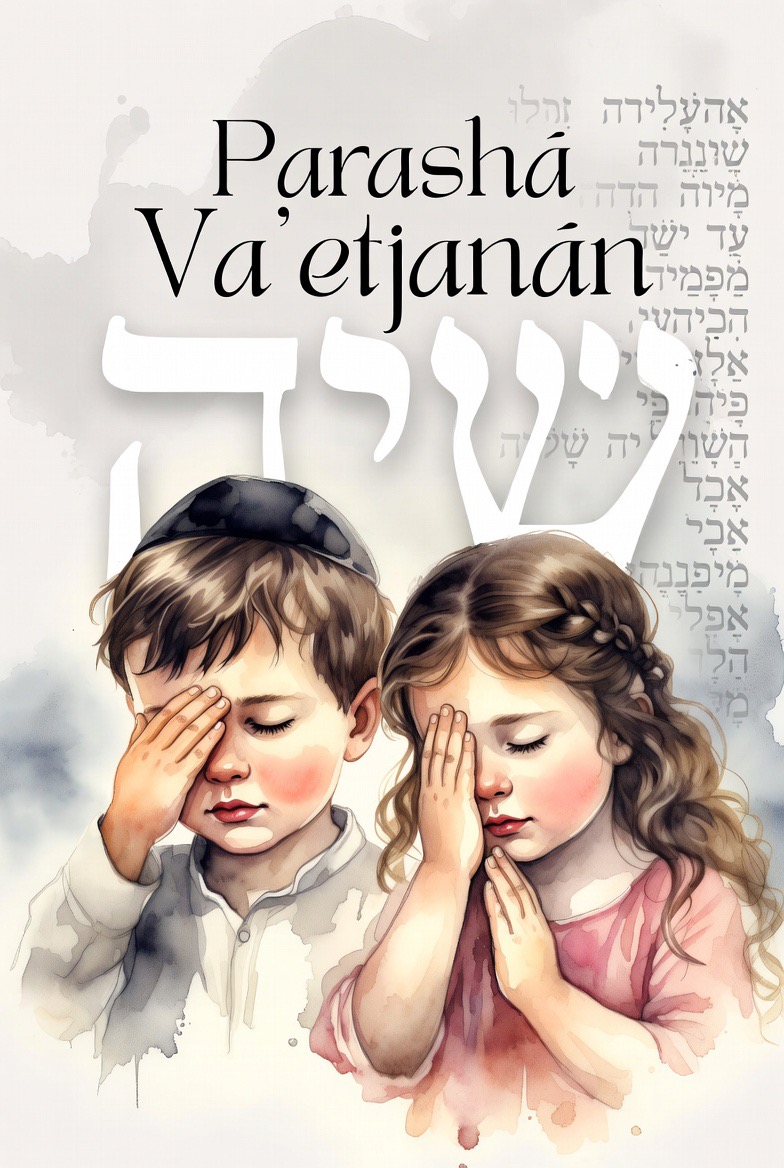
VA’ETCHANAN – The Greatness and Love of the Creator

On the Plains of Moab

On the plains of Moab, Moses addresses a generation that did not know Egypt, yet will inherit its memory.

Va’etchanan is his spiritual testament.

Moses recalls the commandments and teaches how to live them with love.

This parashah is the heart of the covenant, where law becomes relationship, and obedience becomes love.

The Plea of Moses

“O Lord G-d, You have begun to show Your servant Your greatness and Your mighty hand; for what G-d is there in heaven or on earth who can do according to Your works and according to Your might?”

— Deuteronomy 3:24

Moses does not ask for power; he asks for understanding. His prayer paves the way for a generation that must learn to see G-d not in the stars, but in history.

The Distinction: Laws, Precepts, and Statutes

You must understand the essence of what the Creator has bestowed upon us:

Laws and Precepts (Mishpatim): Social and moral rules whose logic is evident to human reason, such as not stealing or acting with justice.

Statutes (Chukim): Divine decrees that transcend our intellectual understanding, given as a direct bond of faithfulness between the King and His people.

1. Take Care Not to Make Carved Images (Israel)

We do not worship the visible, nor do we reduce the Infinite to a form of stone or metal.

“…lest you act corruptly and make for yourselves a carved image in the form of any figure, the likeness of male or female, the likeness of any animal that is on the earth, the likeness of any winged bird that flies in the air…”

— Deuteronomy 4:16–18
2. The Heavenly Bodies and Their Role for Other Peoples

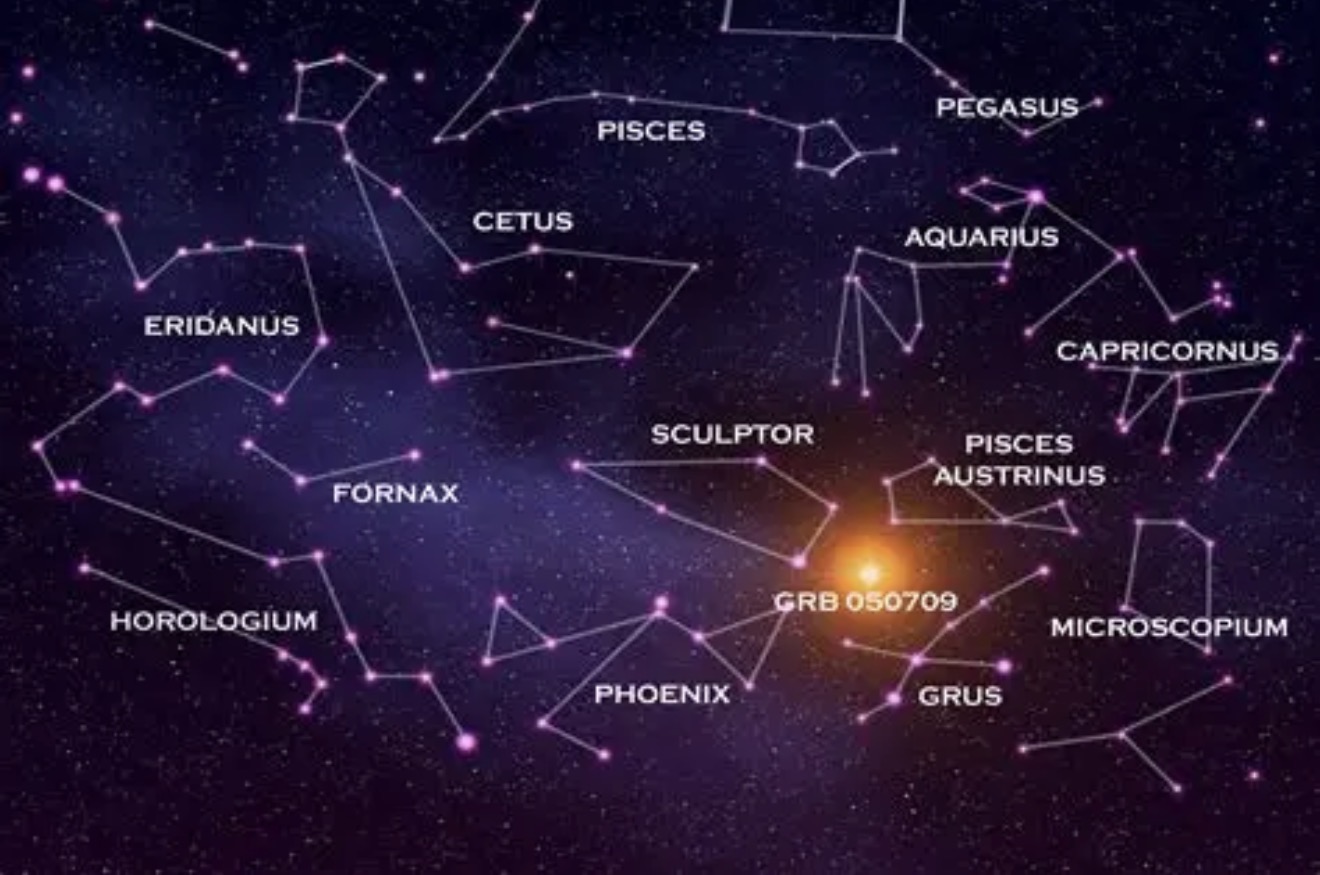
Observe the heavens, but do not bow down before them. The stars and planets were set as luminous signs for the nations of the world, so that they may admire creation. However, you are not governed by the heavenly bodies, but directly by the hand of Divine Providence.

“And lest you lift up your eyes to heaven, and when you see the sun, the moon, and the stars, all the host of heaven, you feel driven to worship them and serve them, which the Lord your G-d has allotted to all the peoples under the whole heaven.”

— Deuteronomy 4:19

Reflection on the Wisdom of Our Sages

Let us remember what the memories of our ancestors teach us about our father Abraham. He looked at the stars and thought that his astrological destiny prevented him from having offspring. But the Creator took him, elevated him above the celestial sphere, and said to him: “Look now toward heaven and count the stars… so shall your descendants be.” The Almighty altered the order of the stars to demonstrate that the faith of Israel transcends astrology. For this reason, we are forbidden from turning to diviners, soothsayers, or mediums. The final word on our life does not belong to the stars or to chance; it always belongs to the Creator.

3. The Reason for Our Distinction: The Exodus from Egypt

We did not receive the commandments through our own merit, but because He rescued us from suffering to be His treasured inheritance.

“But the Lord has taken you and brought you out of the iron furnace, out of Egypt, to be a people of His inheritance, as you are this day.”

— Deuteronomy 4:20

The Warning to Future Generations

1. Let your children beware of idolatry

Spiritual disconnection occurs when we become comfortable in abundance and forget the source of our blessings.

“Take care lest you forget the covenant of the Lord your G-d…”

— Deuteronomy 4:23

“When you father children and children’s children, and have grown old in the land, if you act corruptly by making a carved image in the form of anything…”

— Deuteronomy 4:25

2. The Eternal Witnesses

Heaven and earth endure; therefore I call them today as witnesses to this covenant. They are not inert elements, but active creations that sustain the order of the universe.

“I call heaven and earth to witness against you today, that you will soon utterly perish from the land that you are going over the Jordan to possess…”

— Deuteronomy 4:26

3. Dispersion and Return through Mercy

If you turn away, you will be scattered; yet Divine goodness is never exhausted if you choose to return with all your heart.

“And the Lord will scatter you among the peoples, and you will be left few in number among the nations… But if from there you seek the Lord your G-d, you will find Him, if you search after Him with all your heart and with all your soul.”

— Deuteronomy 4:27–31

Historical Evidence and the True G-d

1. Unmatched Signs and Wonders

No other people has heard the voice of G-d speaking out of the midst of the fire and lived to tell about it.

“Or has any god ever attempted to go and take for himself a nation from the midst of another nation, by trials, by signs, by wonders, and by war…?”

— Deuteronomy 4:33–35

2. The Absolute Certainty of His Oneness

This is the foundation of our entire existence.

“To you it was shown, that you might know that the Lord is G-d; there is no other besides Him… Know therefore today, and take it to heart, that the Lord is G-d in heaven above and on the earth beneath; there is no other.”

— Deuteronomy 4:35, 39

3. The Merit of the Patriarchs

The blessings you receive are rooted in the love that G-d had for our fathers. For this reason we constantly invoke Him as: “G-d of Abraham, G-d of Isaac, and G-d of Jacob” (Israel).

“And because He loved your fathers and chose their offspring after them, He brought you out of Egypt with His presence, by His great power.”

— Deuteronomy 4:37

Justice and Mercy: The Cities of Refuge

Even amidst the laws, the Almighty establishes avenues for the protection of human life.

“Then Moses set apart three cities east of the Jordan, toward the sunrise, that the manslayer might flee there, anyone who kills his neighbor unintentionally…”

— Deuteronomy 4:41–42

The Heart of the Covenant: The Shema and the Commandments

We reach the center of our faith. These words must be engraved upon your minds and upon those of your descendants.

1. The Decalogue and the Covenant of Love

“I am the Lord your G-d, who brought you out of the land of Egypt, out of the house of slavery. You shall have no other gods before Me…”

— Deuteronomy 5:6–21 (Encompassing the Sabbath, honoring parents, and community ethics).
2. The Shema Yisrael and Our Daily Mission

“Hear therefore, O Israel, and be careful to do them, that it may go well with you…”

— Deuteronomy 6:3

“Hear, O Israel: The Lord our G-d, the Lord is one.”

— Deuteronomy 6:4

“You shall love the Lord your G-d with all your heart and with all your soul and with all your might.”

— Deuteronomy 6:5

“And these words that I command you today shall be on your heart…”

— Deuteronomy 6:6

Preserving Our Identity in the Promised Land

When you enter the land, the temptation to assimilate into idolatry will be great. Preserving our holiness depends on the choices made within each family.

1. Preserving the Spiritual Home

“You shall not intermarry with them, giving your daughters to their sons or taking their daughters for your sons, for they would turn away your sons from following Me, to serve other gods…”

— Deuteronomy 7:3–4

2. Destroying Idolatry

“But thus shall you deal with them: you shall break down their altars and dash in pieces their pillars and chop down their Asherim and burn their carved images with fire.”

— Deuteronomy 7:5–6

3. Chosen by Love, Not by Might or Numbers

Never think you are superior due to numbers or physical power. The greatness of Israel lies in its spiritual connection.

“It was not because you were more in number than any other people that the Lord set His love on you and chose you, for you were the fewest of all peoples, but it is because the Lord loves you and is keeping the oath that He swore to your fathers…”

— Deuteronomy 7:7–8

Conclusion

Va’etchanan reminds us that faith is not merely inherited: it is taught. That love is not imposed: it is transmitted. And that the covenant is not just spoken: it is lived.

“We are not guided by stars, but by the voice of the Almighty.

We are chosen not for greatness, but through love.

Let us carry these words on our journey. May the Torah be a constant guide, and may the light of truth illuminate every one of our steps in the promised land.”

Echoes of the Covenant: Complementary Readings

•  Psalm 19 — Creation as a witness to the divine glory.

•  Exodus 19:1–8 — The covenant at Sinai, where the voice of the Almighty becomes living law.

•  Jeremiah 31:1–25 — Eternal love and the promise of return.

These three readings reflect the same truth that Moses taught in Va’etchanan:

The greatness of the Creator is revealed in the word, not in the image; in mercy, not in power; in a love that is never extinguished.

 

VAETJANÁN- La Grandeza y el Amor del Creador

En las llanuras de Moab

En las llanuras de Moab, Moises se dirige a una generación que no conoció Egipto, pero heredará su memoria.

Vaetjanan, es su testamento espiritual.

Moisés recuerda los mandamientos y enseña cómo vivirlos con amor.

Esta parashá es el corazón del pacto,  donde la ley se convierte en relación, y la obediencia en amor.

La súplica de Moisés

“¡Oh, Señor Di-s! Tú has comenzado a mostrar a Tu siervo Tu grandeza y Tu mano fuerte; porque ¿qué Di-s hay en el cielo o en la tierra que pueda hacer tus obras y que tenga Tu poder?”

— Deuteronomio 3:24

Moisés no pide poder, pide comprensión. Su plegaria abre el camino para una generación que debe aprender a ver a Di-s no en las estrellas, sino en la historia.

La Distinción: Leyes, Preceptos y Estatutos

Deben comprender la esencia de lo que el Creador nos ha entregado:

 Leyes y Preceptos (Mishpatim): Reglas sociales y morales cuya lógica es evidente para la razón humana, como no robar o actuar con justicia.

 Estatutos (Jukim): Decretos divinos que trascienden nuestro entendimiento intelectivo, dados como un lazo directo de fidelidad entre el Rey y Su pueblo.

1. Cuídate de hacer imágenes esculpidas (Israel)

Nosotros no adoramos lo visible ni reducimos lo Infinito a una forma de piedra o metal.

Para que no os corrompáis y hagáis para vosotros escultura, imagen de figura alguna, efigie de varón o hembra, figura de algún animal que sea en la tierra, figura de ave alguna alada que vuele por el aire…”

— Deuteronomio 4:16-18

2. Los astros y la función para los demás pueblos

Observen los cielos, pero no se poster ante ellos. Las estrellas y los planetas fueron puestos como señales luminosas para las naciones del mundo, para que admiren la creación. Sin embargo, ustedes no están gobernados por los astros, sino directamente por la mano de la Providencia Divina.

“No sea que alces tus ojos al cielo, y viendo el sol y la luna y las estrellas, y todo el ejército del cielo, seas impulsado, y te inclines a ellos y les sirvas; porque el Eterno tu Di-s los ha concedido a todos los pueblos debajo de todos los cielos.”

— Deuteronomio 4:19

Reflexión de la historia de los Sabios:

Recordemos lo que enseñan las memorias de nuestros ancestros sobre nuestro padre Abraham. Él miró las estrellas y pensó que su destino astrológico le impedía tener descendencia. Pero el Creador lo tomó, lo elevó por encima de la bóveda celeste y le dijo: “Mira ahora los cielos y cuenta las estrellas… así será tu descendencia”. El Eterno cambió el orden de los astros para demostrar que la fe de Israel está por encima de la astrología. Por esta razón, nos está prohibido recurrir a adivinos, agoreros o consultar a los muertos. La última palabra sobre nuestra vida no la tienen las estrellas ni la suerte: la tiene siempre el Creador.

3. La razón de nuestra distinción: La salida de Egipto

No recibimos los mandamientos por mérito propio, sino porque Él nos rescató del sufrimiento para ser Su pueblo de heredad.

“Pero a vosotros el Eterno os tomó, y os ha sacado del horno de hierro, de Egipto, para que seáis el pueblo de su heredad, como en este día.”

— Deuteronomio 4:20

La Advertencia a las Futuras Generaciones

1. Que tus hijos se cuiden de la idolatría

La desconexión espiritual ocurre cuando nos acomodamos en la abundancia y olvidamos la fuente de nuestras bendiciones.

“Cuidaos de no olvidaros del pacto del Eterno vuestro Di-s…”

— Deuteronomio 4:23


“Si tras larga permanencia en esa tierra,  tuvieras  hijos e hijos de vuestros hijos y que os corrompierais haciéndolos ídolo, escultura o imagen de cualquier cosa…”

— Deuteronomio 4:25

2. Los testigos eternos

El cielo y la tierra permanecen; por eso los llamo hoy como testigos de esta alianza. No son elementos inertes, sino creaciones activas que sostienen el orden del universo.

Yo tomo hoy por testigos contra vosotros al cielo y a la tierra, que de cierto pereceréis pronto de la tierra hacia la cual pasáis el Jordán para tomar posesión de ella…”

— Deuteronomio 4:26

3. La dispersión y el retorno por misericordia

Si se alejan, serán esparcidos; pero la bondad divina nunca se agota si deciden regresar de todo corazón.

“Y el Eterno os esparcirá entre los pueblos, y quedaréis pocos en número entre las naciones… Mas si desde allí buscares al Eterno tu Di-s, lo hallarás, si lo buscares de todo tu corazón y de toda tu alma.”

— Deuteronomio 4:27-31

La Evidencia Histórica y el Dios Verdadero

1. Señales y prodigios sin igual

Ningún otro pueblo escuchó la voz de Di-s hablar desde el fuego y vivió para contarlo.

“¿O ha intentado Di-s ir a tomar para sí una nación de en medio de otra nación, con pruebas, con señales, con milagros y con guerra…?”

— Deuteronomio 4:33-35

2. La certeza absoluta de Su Unicidad

Esta es la base de todo nuestro ser.

“A ti te fue mostrado, para que supieses que el Eterno es Di-s, y no hay otro fuera de Él… Aprende pues hoy, y reflexiona en tu corazón que el Eterno es Di-s arriba en el cielo y abajo en la tierra, y no hay otro.”

— Deuteronomio 4:35, 39

3. El mérito de los Patriarcas

Las bendiciones que reciben tienen su raíz en el amor que Di-s tuvo por nuestros padres. Por eso lo llamamos siempre; “Di-s de Abraham, Di-s de Isaac y Di-s de Jacob”(Israel).

“Y por cuanto Él amó a tus padres, escogió a su descendencia después de ellos, y te sacó de Egipto con su presencia y con su gran poder.”

— Deuteronomio 4:37

Justicia y Misericordia: Las Ciudades de Refugio

Aun en medio de las leyes, el Eterno establece vías para la protección de la vida humana.

“Entonces separó Moisés tres ciudades a este lado del Jordán, al nacimiento del sol, para que huyese allí el homicida que matase a su prójimo sin intención…”

— Deuteronomio 4:41-42

El Corazón del Pacto: El Sh’má y los Mandamientos

Llegamos al centro de nuestra fe. Estas palabras deben estar grabadas en sus mentes y en las de sus descendientes.

1. El Decálogo y la Alianza de Amor

Yo soy el Eterno tu Di-s, que te saqué de la tierra de Egipto, de casa de servidumbre. No tendrás dioses ajenos delante de mí…”

— Deuteronomio 5:6-21 (Abarcando el Shabat, el honor a los padres y la ética comunitaria).

2. El Sh’má Israel y nuestra misión diaria

“Oye, pues, oh Israel, y cuida de ponerlos por obra, para que te vaya bien…” — Deuteronomio 6:3

“Oye, Israel: el Eterno nuestro Di-s, el Eterno uno es.” — Deuteronomio 6:4

“Y amarás al Eterno tu Di-s de todo tu corazón, y de toda tu alma, y con todas tus fuerzas.” — Deuteronomio 6:5

“Y estas palabras que yo te mando hoy, estarán sobre tu corazón…” — Deuteronomio 6:6

Mantenimiento de la Identidad en la Tierra prometida

Cuando entren en la tierra, la tentación de asimilarse a la idolatría será grande. La preservación de nuestra santidad depende de las elecciones familiares que hagan.

1. Preservar el hogar espiritual

Y no emparentarás con ellas; no darás tu hija a su hijo, ni tomarás su hija para tu hijo. Por cuanto ella apartará a tu hijo de Mí, y servirán a dioses ajenos…”

— Deuteronomio 7:3-4

2. Destruir la idolatría

Mas así habéis de hacer con ellos: sus altares destruiréis, y quebraréis sus estatuas, y destruiréis sus imágenes de Asera, y quemaréis sus esculturas en el fuego.”

— Deuteronomio 7:5-6

3. La elección por amor, no por fuerza o número

Nunca piensen que son superiores por cantidad o poder físico. La grandeza de Israel radica en su conexión espiritual.

No por ser vosotros más que todos los pueblos os ha querido el Eterno y os ha escogido, pues vosotros erais el más insignificante de todos los pueblos; sino por cuanto el Eterno os amó, y quiso guardar el juramento que juró a vuestros padres…”

— Deuteronomio 7:7-8

Conclusión

Vaetjanán nos recuerda que la fe no se hereda: se enseña. Que el amor no se impone: se transmite. Y que el pacto no se repite: se vive.

“No somos guiados por estrellas, sino por la voz del Eterno.
No  elegidos por grandeza, sino por amor.

Llevemos estas palabras en nuestro andar. Que la Torá sea una guía constante, y que la luz de la verdad ilumine cada uno de nuestros pasos en la tierra prometida.


Ecos del Pacto : Lecturas complementarias

Los Salmo 19 La creación como testigo de la gloria divina.

Éxodo 19:1‑8 El pacto en el Sinaí, donde la voz del Eterno se convierte en ley viva.

Jeremías 31:1‑25 El amor eterno y la promesa del retorno.

Estas tres lecturas reflejan la misma verdad que Moisés enseñó en Vaetjanán:
La grandeza del Creador se revela en la palabra, no en la imagen; en la misericordia, no en el poder; en el amor que nunca se extingue.