The Choice Between Blessing, Holiness, and Life

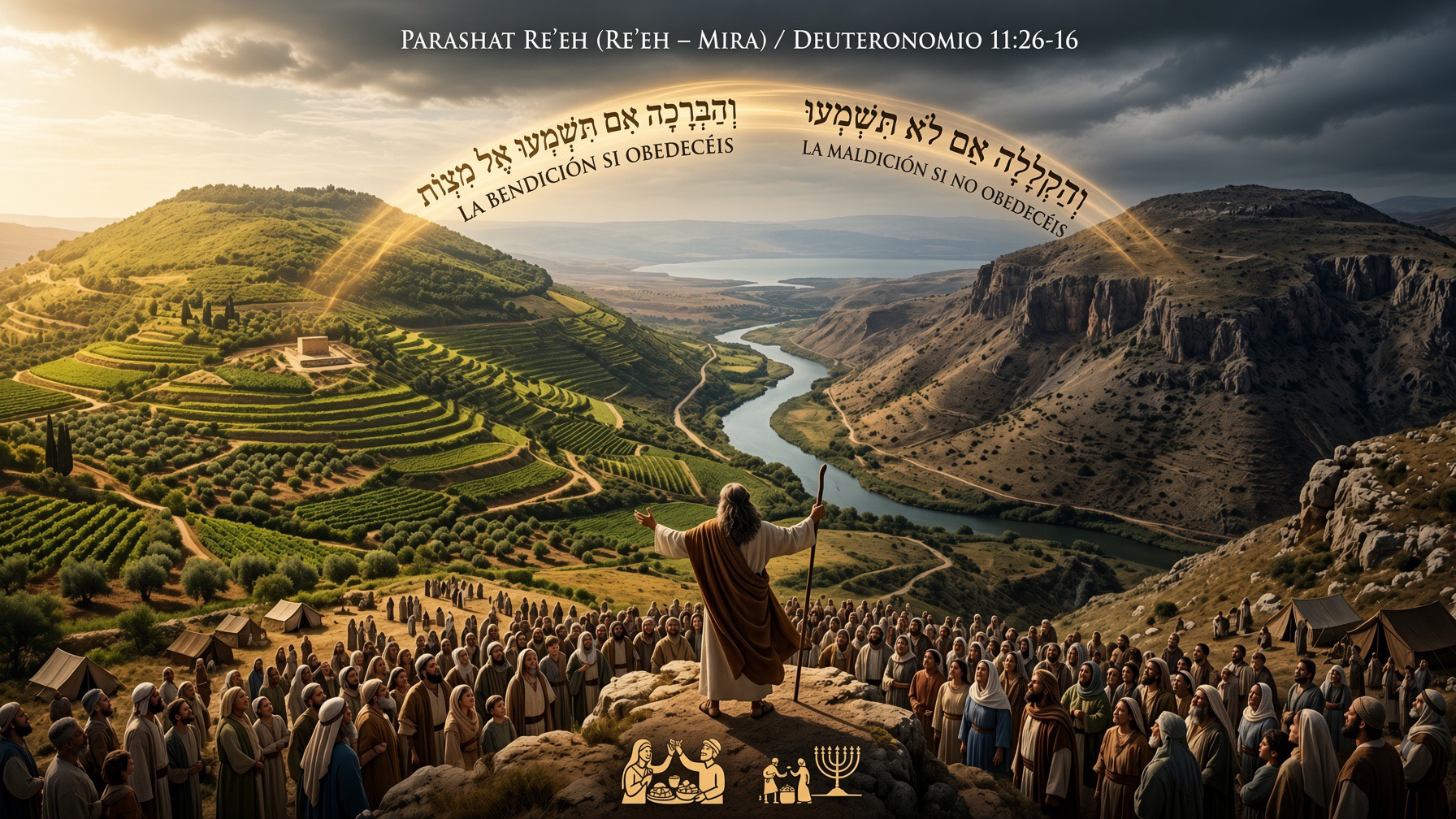
In Parashat Re’eh (Deuteronomy 11:26–16:17), Moses presents the people with a momentous decision: the blessing born of obedience, or the consequences of turning away from the path of the Eternal.

This Torah portion demonstrates that spirituality does not float in the clouds; rather, it manifests in what we eat, how we protect those in need, and the way we structure our community.

I. Structure and Key Themes of the Parashah

1. The Choice: Blessing and Curse (Deut. 11:26–32)

 The Decision: Moses presents the choice between obedience (blessing) and turning away after false ideologies and idolatry (curse).

 The Mountains: An instruction is given to proclaim the blessings from Mount Gerizim and the curses from Mount Ebal.

2. A Single Place of Worship and Purity of Cult (Deut. 12:1–32)

 Eradication of Idolatry: The destruction of pagan altars and places of worship in the land.

 The Chosen Place: Worship must be conducted solely in the place the Eternal chooses to establish His Name, avoiding the abhorrent practices of the surrounding nations (such as child sacrifice).

 Prohibition of Blood: Consuming meat for food is permitted, but blood—wherein the vitality (nefesh) resides—must be poured onto the earth and never consumed (Deut. 12:16, 23–25).

3. Warning Against False Prophets (Deut. 13:1–18)

 The Test: If a prophet or dreamer arises with real signs but invites the people to follow other gods, it serves as a test from the Eternal to examine the devotion of the heart.

4. Identity, Dietary Holiness, and Laws of Kashrut (Deut. 14:1–21)

 Holy People: Prohibition of pagan mourning customs (such as making incisions on the skin).

Dietary Distinction: Separation from biologically harmful species and the preservation of pure animals.

5. The Tithe and Social Generosity (Deut. 14:22–29)

 Use of the Tithe (Ma’aser): Setting aside the annual tithe. If the distance to the chosen place is too great, it may be converted into money to purchase food at the sacred site and rejoice with one’s family.

 Community Support: The obligation to share and provide for the Levite, the foreigner, the orphan, and the widow.

6. The Sabbatical Year (Shemitah) and Care for the Poor (Deut. 15:1–23)

 Remission of Debts: Every seven years, debts between brothers are forgiven.

 A Generous Heart: A warning against greed: “For the poor will never cease out of the land; therefore I command you, saying, ‘You shall open your hand wide unto your brother'” (Deut. 15:11).

 Release of Servants: Emancipation of Hebrew servants in the seventh year, providing them with resources to begin a dignified life.

7. The Three Pilgrimage Festivals (Shalosh Regalim) (Deut. 16:1–17)

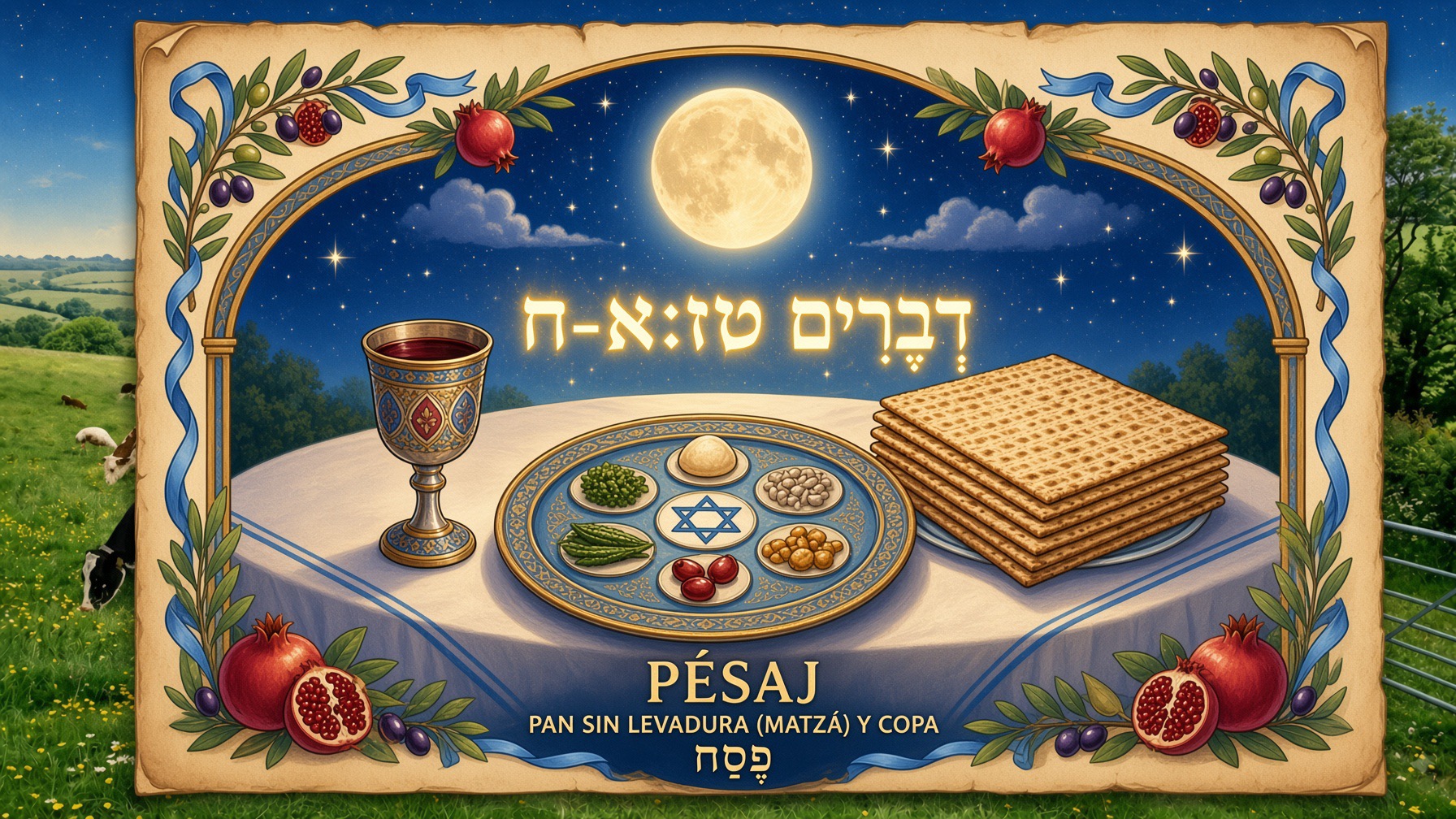
 Pesach: Remembers the liberation from Egypt and the urgency of freedom. Unleavened bread (matzah) is eaten for seven days as a symbol of humility and abstention from chametz.
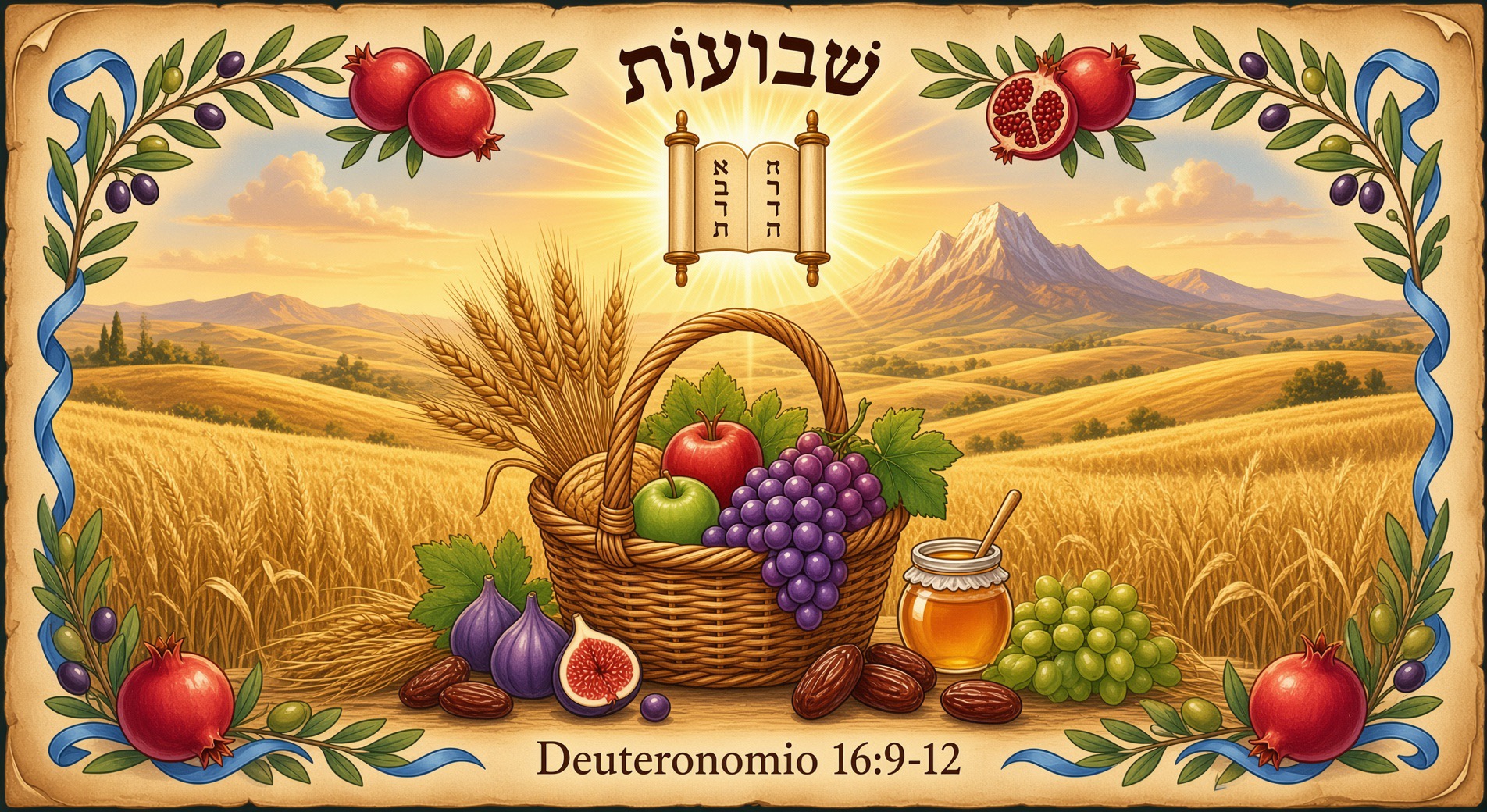
 Shavuot: Celebration of the giving of the Torah at Sinai and gratitude for the harvest of the first fruits of the land with communal rejoicing.
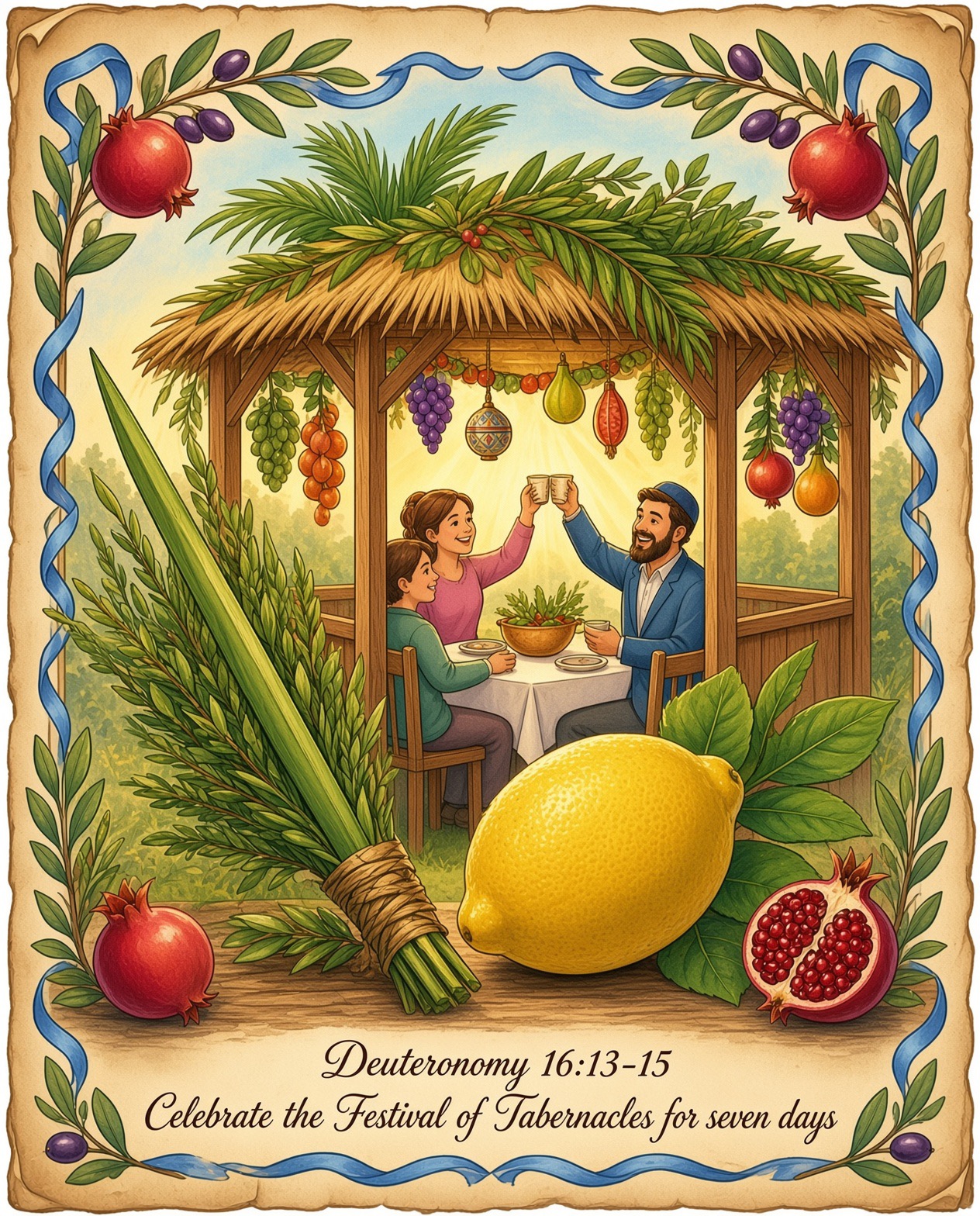
 Sukkot  (Deut. 16:13–15): The Festival of Booths for seven days. It recalls the 40 years in the wilderness under the Eternal’s clouds of glory and the gathering of the Four Species (Arba’at HaMinim).
Presentation:

Every male must appear before the Eternal during the three pilgrimage festivals with offerings proportional to his blessing.

II. Holiness at the Table: The Wisdom of Kashrut and Modern Biology

The Creator of the human body is the same Creator of the Torah. Therefore, the laws of Kashrut function as laws of biological preservation.
1. Land Animals

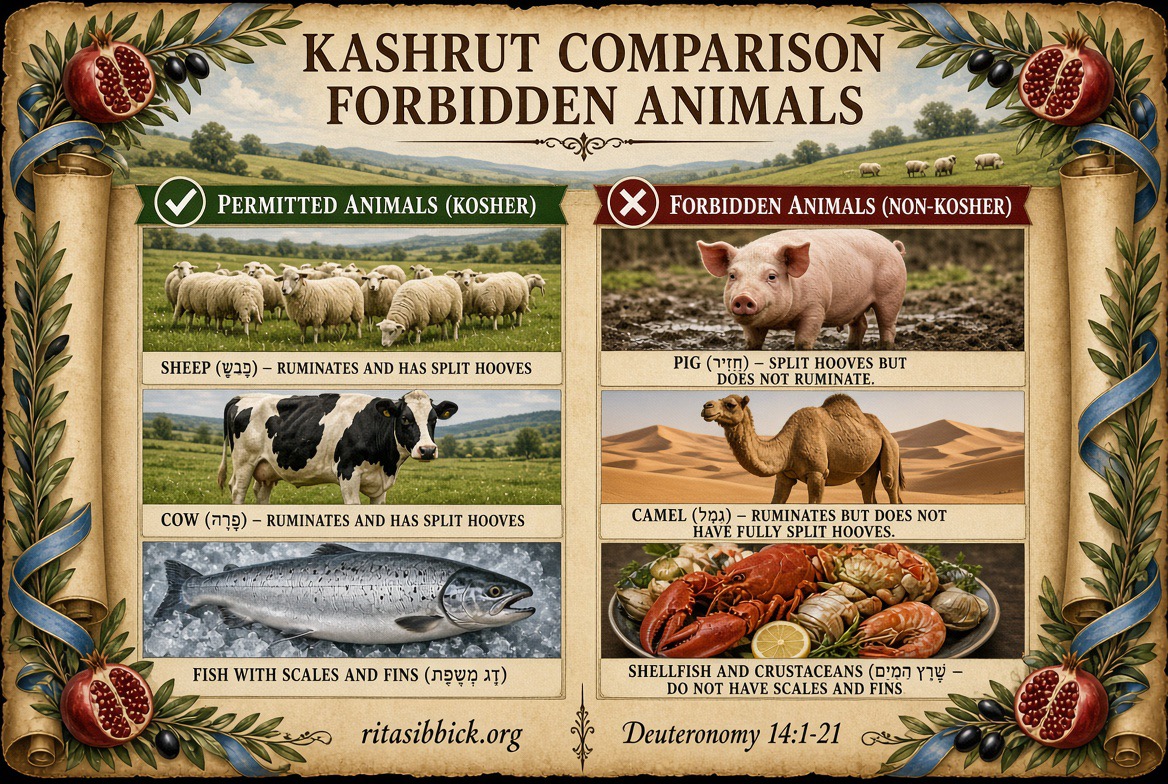
 Permitted Animals (Pure): Ruminants with split hooves (cows, sheep, goats, deer).

 Forbidden Animals (Impure): Non-ruminants or those without split hooves (pork, camels).

 Biological and Health Rationale: Ruminants possess multiple stomachs that process food slowly (24+ hours), effectively filtering out toxins. In contrast, swine digest food in only 3 to 4 hours, accumulating parasites (Trichinella), bacteria (Salmonella), and toxins directly within their fat and meat.

2. Aquatic Creatures

 Permitted Animals (Pure): Those with fins and scales.

 Forbidden Animals (Impure): Creatures lacking fins or scales (shellfish, shrimp, crabs, mollusks, catfish).

 Biological and Health Rationale: Shellfish serve as the bottom-feeders and natural filterers of the ocean floor. They accumulate heavy metals (mercurial compounds, lead), biotoxins, and microplastics. Their elevated purine content also increases uric acid levels, triggering metabolic conditions.

3. Birds and Insects

 Permitted Animals (Pure): Pure birds (chickens, turkeys, doves).

 Forbidden Animals (Impure): Birds of prey, scavengers, and winged insects.

 Biological and Health Rationale: Scavenger birds feed on decaying carcasses loaded with pathogens. Consuming them acts as a vector transmitting infectious diseases to humans.

III. Obedience through Faith and Contemporary Scientific Evidence

When the people of Israel stood at the foot of the mountain, they declared with one voice: “Na’aseh VeNishma” (“We will do and we will hear” – Exodus 24:7).

They did not demand laboratory analyses or anatomy lessons to obey; they trusted entirely in the Infinite Wisdom of the Eternal.

Today, epidemiological research confirms that ancient faith:

 Health “Blue Zones”: Worldwide clinical studies—such as those conducted by Loma Linda University in California on the Seventh-day Adventist community (who adopted the Biblical dietary code of Leviticus and Deuteronomy)—reveal that this population enjoys one of the highest life expectancies on earth.

 Disease Prevention: Data demonstrates that abstaining from impure meats and adhering to Biblical nutritional principles significantly reduces:

 The incidence of colon and stomach cancers. Cardiovascular diseases and hypertension. Type 2 diabetes, obesity, and metabolic syndrome.

IV. Philosophical and Historical Reflection

 An Unprecedented Social Model: While ancient legal codes (such as the Code of Hammurabi) were drafted to consolidate power and property for elite ruling classes, the Torah established humanity’s first social safety net. The Sabbatical year (Shemitah), debt forgiveness, and mandatory tithes for the orphan and widow transformed compassion into a civic duty and a moral imperative.

 Sustaining Education and Equity: The tithe designated for the Levite ensured that the teachers and instructors of the law did not have to compete for land ownership. This maintained an educational and spiritual system free from material corruption while guaranteeing meals for the vulnerable.

Conclusion

Parashat Re’eh places us in the very same position as our ancestors: before a conscious choice. Embracing the commandments of the Eternal is not an act of blind religious submission, but rather the wise decision to align our lives, our health, and our society with the fundamental laws of the Universe. What the Eternal decrees for the holiness of the soul perfectly preserves the life of the body.
Parashá Re’eh

La Elección entre la Bendición, la Santidad y la Vida

En la Parashá Re’eh (Deuteronomio 11:26–16:17), Moshé pone ante el pueblo una decisión trascendental: la bendición que nace de la obediencia o las consecuencias de apartarse del camino del Eterno.

Esta porción de la Torah, demuestra que la espiritualidad, no flota en las nubes, sino que  se manifiesta en lo que comemos, en cómo protegemos al necesitado y en la forma en que organizamos nuestra comunidad.

I. Estructura y Temas Clave de la Parashá

1. La Elección: Bendición y Maldición (Dt 11:26–32)

 La Decisión: Moshé presenta la elección entre la obediencia (bendición) y el desvío tras falsas ideologías e idolatrías (maldición).

 Los Montes: Se ordena proclamar las bendiciones desde el Monte Gerizim y las maldiciones desde el Monte Ebal.


2. Un Solo Lugar de Adoración y Pureza del Culto (Dt 12:1–32)

 Erradicación de la Idolatría: Destrucción de altares y centros de culto pagano en la tierra.

 El Lugar Elegido: El culto debe rendirse únicamente en el sitio que el Eterno elija para establecer Su Nombre, evitando las prácticas aborrecibles de las naciones (como el sacrificio de hijos).


Prohibición de la Sangre: Se permite el consumo de carne limpia para alimento, pero la sangre, donde reside la vitalidad (néfesh), debe derramarse en tierra y jamás consumirse (Dt 12:16, 23–25).


3. Advertencia contra los Falsos Profetas (Dt 13:1–18)

 La Prueba: Si surge un profeta o soñador con señales reales pero invita a seguir a otros dioses, se trata de una prueba del Eterno para examinar la fidelidad del corazón.


4. Identidad, Santidad Alimentaria y Leyes de Kashrut (Dt 14:1–21)

 Pueblo Santo: Prohibición de costumbres de duelo paganas (incisiones en la piel).

 Distinción Alimentaria: Aislamiento de especies biológicamente nocivas y conservación de animales puros.


5. El Diezmo y la Generosidad Social (Dt 14:22–29)

 Uso del Diezmo (Ma’aser): Separar el diezmo anual. Si la distancia al lugar elegido es grande, se convierte en dinero para adquirir alimentos en el sitio sagrado y regocijarse en familia.

 Sostén Comunitario: Obligación de compartir y proveer para el levita, el extranjero, el huérfano y la viuda.


6. El Año Sabático (Shemitá) y el Cuidado del Pobre (Dt 15:1–23)

 Remisión de Deudas: Cada siete años se perdona la deuda entre hermanos.

 Corazón Generoso: Advertencia contra la avaricia: “Nunca faltarán pobres en la tierra; por eso te ordeno que abras tu mano a tu hermano” (Dt 15:11).

 Liberación de Siervos: Emancipación de hebreos al séptimo año, otorgándoles recursos para iniciar una vida digna.


7. Las Tres Fiestas de Peregrinación (Shalosh Regalim) (Dt 16:1–17)

 Pésaj: Memoria de la liberación de Egipto y la prisa por la libertad. Se come pan sin levadura (matzá) durante siete días como símbolo de humildad y abstención de jametz.


 Shavuot: Celebración de la entrega de la Tora en el Sinaí y gratitud por la cosecha de las primicias de la tierra con regocijo comunitario.


Sucot:
(Deuteronomio 16:13-15) Fiesta de las Cabañas durante siete días. Recuerda los 40 años en el desierto bajo las nubes de gloria del Eterno y la unión de las Cuatro Especies (Arbaat HaMinim).


Presentación: Todo varón debe presentarse ante el Eterno en las tres festividades con ofrendas proporcionales a su bendición.


II. Santidad en la Mesa: La Sabiduría del Kashrut y la Biología Moderna

El Creador del cuerpo humano es el mismo Creador de la Torá. Por ello, las leyes de Kashrut son leyes de conservación biológica.

Categoría: “Terrestres”

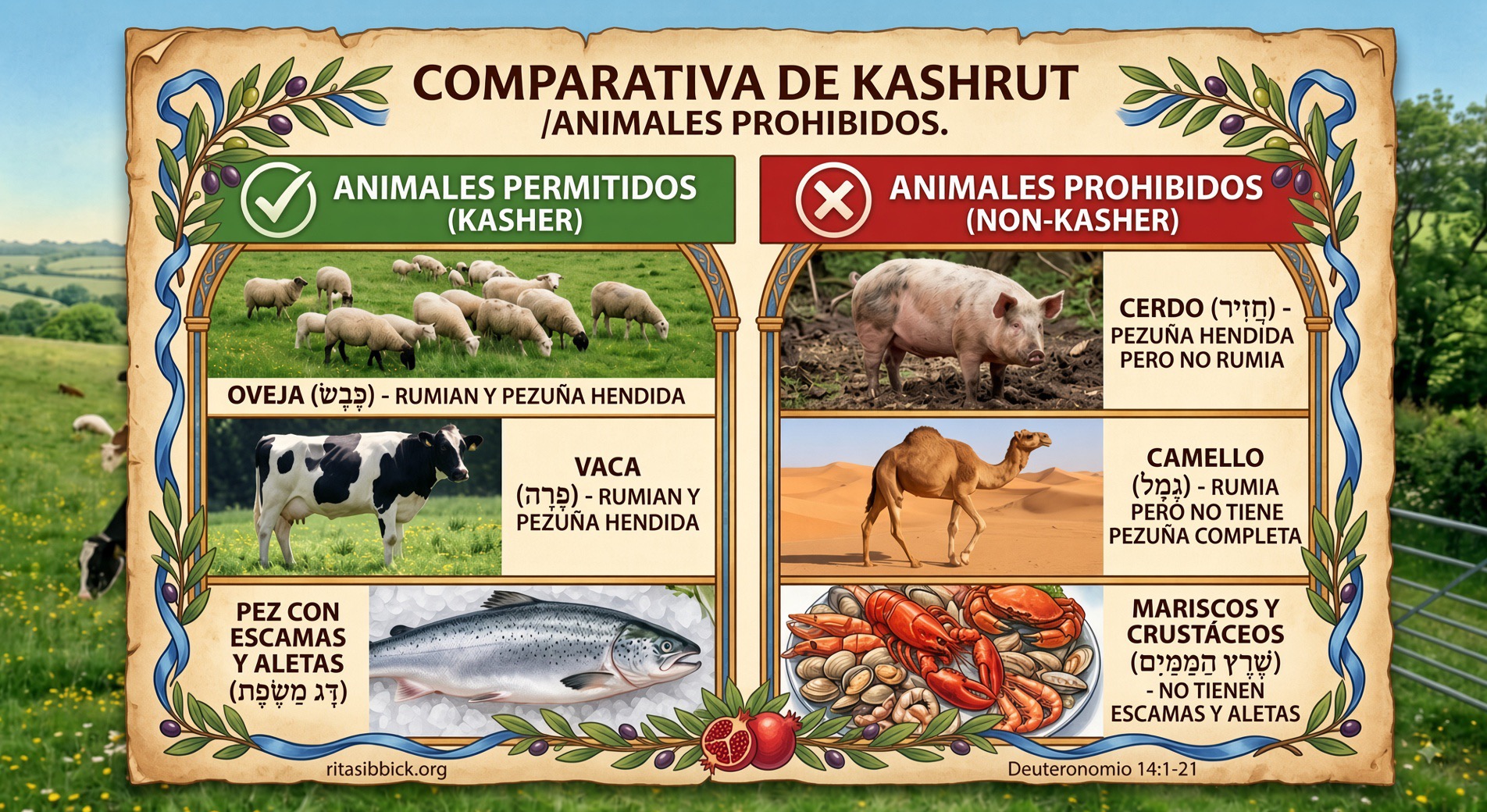
 Animales Permitidos (Puros): Rumiantes con pezuña hendida (Vaca, oveja, cabra, ciervo).

 Animales Prohibidos (Impuros): No rumiantes o sin pezuña hendida (Cerdo, camello).

 Razón Biológica y Sanitaria: Los rumiantes poseen múltiples estómagos que procesan la comida lentamente (24+ horas), filtrando toxinas. El cerdo digiere en solo 3-4 horas, acumulando parásitos (Trichinella), bacterias (Salmonella) y toxinas directamente en su grasa y carne.

Categoría: “Acuáticos”

 Animales Permitidos (Puros): Aquellos con aletas y escamas.

 Animales Prohibidos (Impuros): Sin aletas ni escamas (Mariscos, camarones, cangrejos, moluscos, bagre).

 Razón Biológica y Sanitaria: Los mariscos son los “filtradores” y limpiadores del fondo marino. Acumulan metales pesados (mercurio, plomo), biotoxinas y microplásticos. Su alto contenido de purinas eleva el ácido úrico y desencadena patologías metabólicas.

Categoría: “Aves e Insectos”

 Animales Permitidos (Puros): Aves puras (Gallina, pavo, paloma).

 Animales Prohibidos (Impuros): Aves de rapiña, carroñeras e insectos alados.

 Razón Biológica y Sanitaria: Las aves carroñeras consumen cadáveres en descomposición llenos de patógenos. Su consumo transmite vectores infecciosos al ser humano.

III. Obediencia por Fe y la Evidencia Científica Contemporánea

Cuando el pueblo de Israel se paró al pie del monte, exclamó con una sola voz: “Na’asé VeNishmá” (“Haremos y escucharemos” – Éxodo 24:7).

No exigieron un análisis de laboratorio ni una lección de anatomía para obedecer; confiaron en la Infinita Sabiduría del Eterno.

Hoy, la investigación epidemiológica le da la razón a esa fe milenaria:

 Las “Zonas Azules” de la Salud: Estudios clínicos de escala mundial, como los desarrollados por la Universidad de Loma Linda en California sobre la comunidad Adventista del Séptimo Día (quienes adoptaron el código alimentario bíblico de Levítico y Deuteronomio),  revelan que esta población ostenta una de las mayores esperanzas de vida del planeta.

 Prevención de Enfermedades: Los datos demuestran que abstenerse de carnes impuras y seguir los principios Bíblicos de nutrición reduce drásticamente:

 “La incidencia de cáncer de colon y estómago. Las enfermedades cardiovasculares y la hipertensión. La diabetes tipo 2, la obesidad y el síndrome metabólico.”

IV. Reflexión Filosófica e Histórica

 Un modelo social sin precedentes: Mientras los códigos de la antigüedad (como el Código de Hammurabi) se redactaron para consolidar el poder y la propiedad de la élite, la Torá instituyó la primera red de protección social de la humanidad.

El año sabático (Shemitá), la cancelación de deudas y los diezmos obligatorios para el huérfano y la viuda transformaron la compasión en un deber civil e imperativo moral.

 El sostén de la enseñanza y la equidad: El diezmo asignado al levita garantizó que los maestros e instructores de la ley no tuvieran que disputar tierras, manteniendo un sistema educativo y espiritual libre de corrupción materialista, mientras se garantizaba el plato de comida para el desamparado.

Conclusión

La Parashá Re’eh nos sitúa en el mismo lugar que a nuestros antepasados: ante una elección consciente. Acoger los mandamientos del Eterno no es un acto de ciega sumisión religiosa, sino la decisión sabia de alinear nuestra vida, nuestra salud y nuestra sociedad con las leyes fundamentales del Universo. Lo que el Eterno decreta para la santidad del alma, preserva de manera perfecta la vida del cuerpo.