
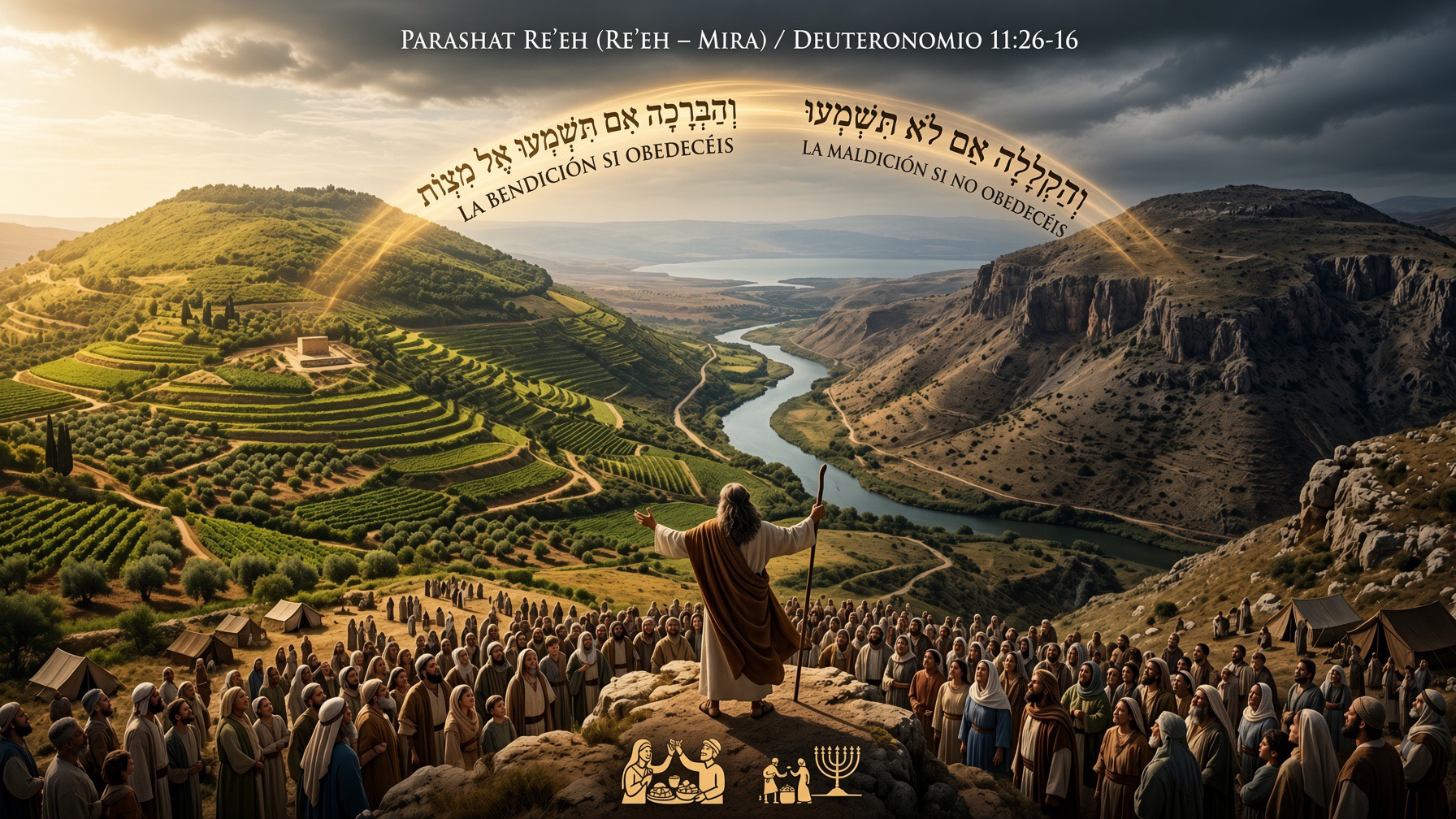
In Parashat Re’eh (Deuteronomy 11:26–16:17), Moses presents the people with a momentous decision: the blessing born of obedience, or the consequences of turning away from the path of the Eternal.
This Torah portion demonstrates that spirituality does not float in the clouds; rather, it manifests in what we eat, how we protect those in need, and the way we structure our community.
I. Structure and Key Themes of the Parashah
1. The Choice: Blessing and Curse (Deut. 11:26–32)
The Decision: Moses presents the choice between obedience (blessing) and turning away after false ideologies and idolatry (curse).
The Mountains: An instruction is given to proclaim the blessings from Mount Gerizim and the curses from Mount Ebal.
2. A Single Place of Worship and Purity of Cult (Deut. 12:1–32)
Eradication of Idolatry: The destruction of pagan altars and places of worship in the land.
The Chosen Place: Worship must be conducted solely in the place the Eternal chooses to establish His Name, avoiding the abhorrent practices of the surrounding nations (such as child sacrifice).
Prohibition of Blood: Consuming meat for food is permitted, but blood—wherein the vitality (nefesh) resides—must be poured onto the earth and never consumed (Deut. 12:16, 23–25).
3. Warning Against False Prophets (Deut. 13:1–18)
The Test: If a prophet or dreamer arises with real signs but invites the people to follow other gods, it serves as a test from the Eternal to examine the devotion of the heart.
4. Identity, Dietary Holiness, and Laws of Kashrut (Deut. 14:1–21)
Holy People: Prohibition of pagan mourning customs (such as making incisions on the skin).
Dietary Distinction: Separation from biologically harmful species and the preservation of pure animals.
5. The Tithe and Social Generosity (Deut. 14:22–29)
Use of the Tithe (Ma’aser): Setting aside the annual tithe. If the distance to the chosen place is too great, it may be converted into money to purchase food at the sacred site and rejoice with one’s family.
Community Support: The obligation to share and provide for the Levite, the foreigner, the orphan, and the widow.
6. The Sabbatical Year (Shemitah) and Care for the Poor (Deut. 15:1–23)
Remission of Debts: Every seven years, debts between brothers are forgiven.
A Generous Heart: A warning against greed: “For the poor will never cease out of the land; therefore I command you, saying, ‘You shall open your hand wide unto your brother'” (Deut. 15:11).
Release of Servants: Emancipation of Hebrew servants in the seventh year, providing them with resources to begin a dignified life.
7. The Three Pilgrimage Festivals (Shalosh Regalim) (Deut. 16:1–17)
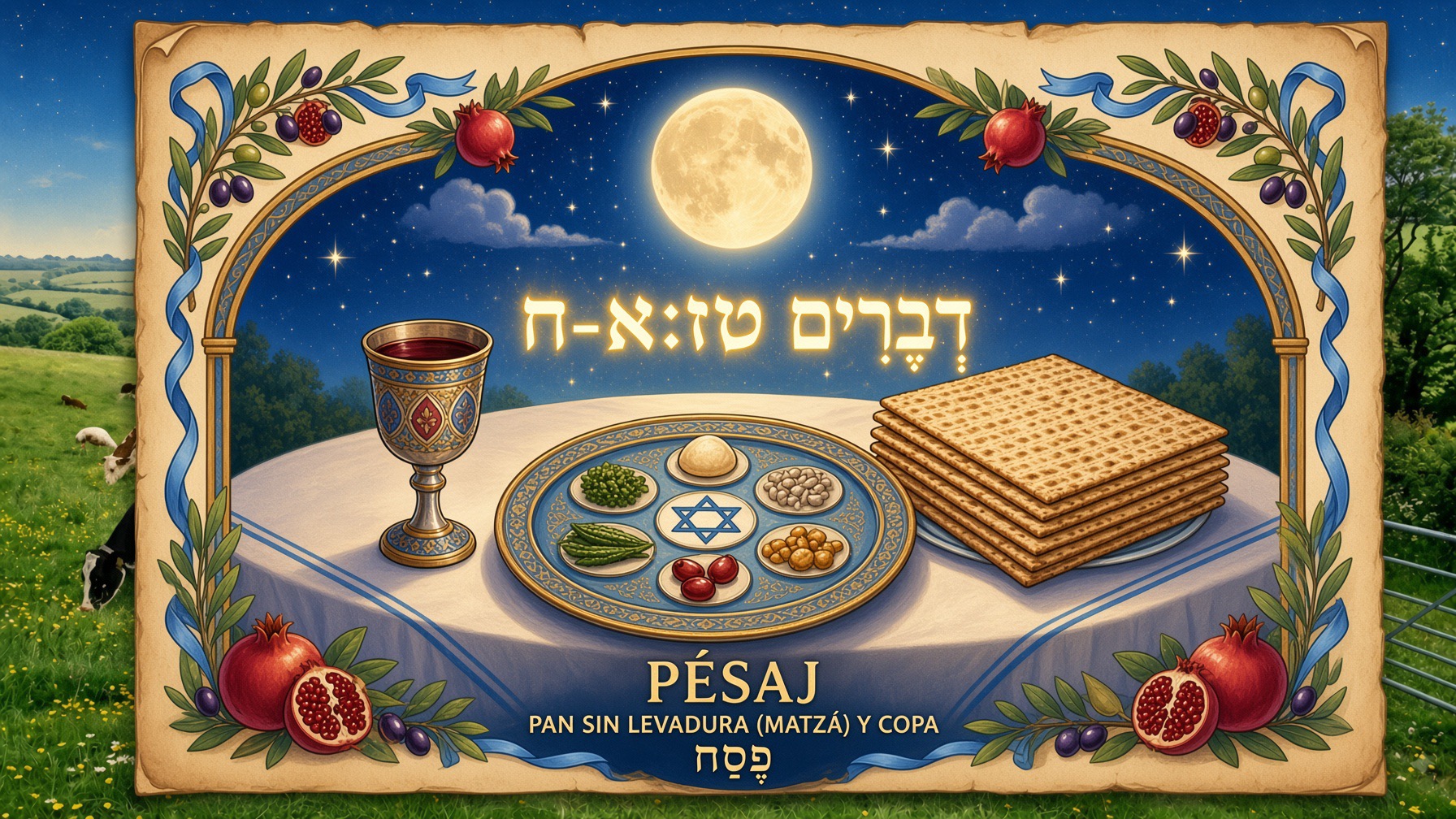
Pesach: Remembers the liberation from Egypt and the urgency of freedom. Unleavened bread (matzah) is eaten for seven days as a symbol of humility and abstention from chametz.
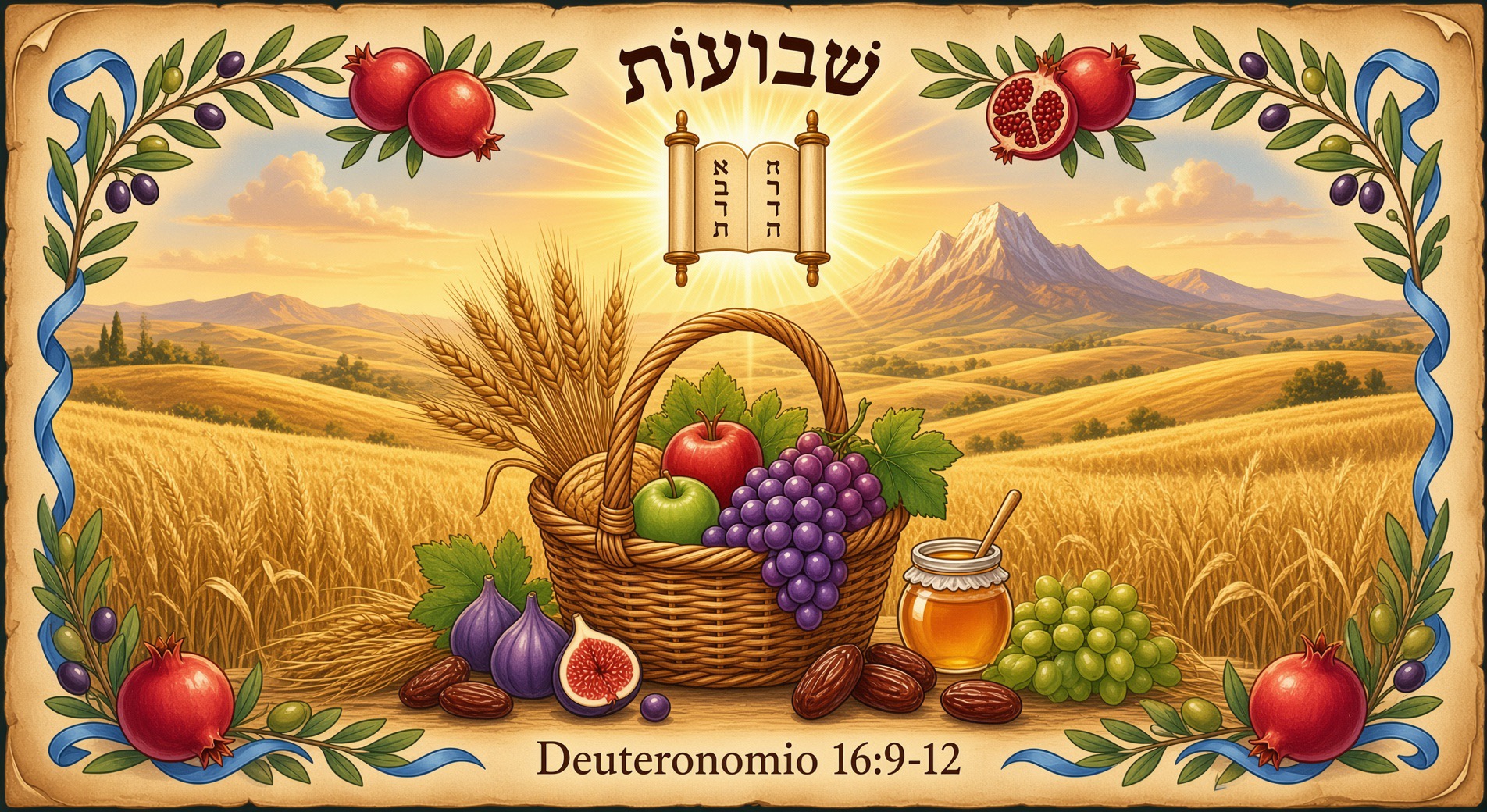
Shavuot: Celebration of the giving of the Torah at Sinai and gratitude for the harvest of the first fruits of the land with communal rejoicing.
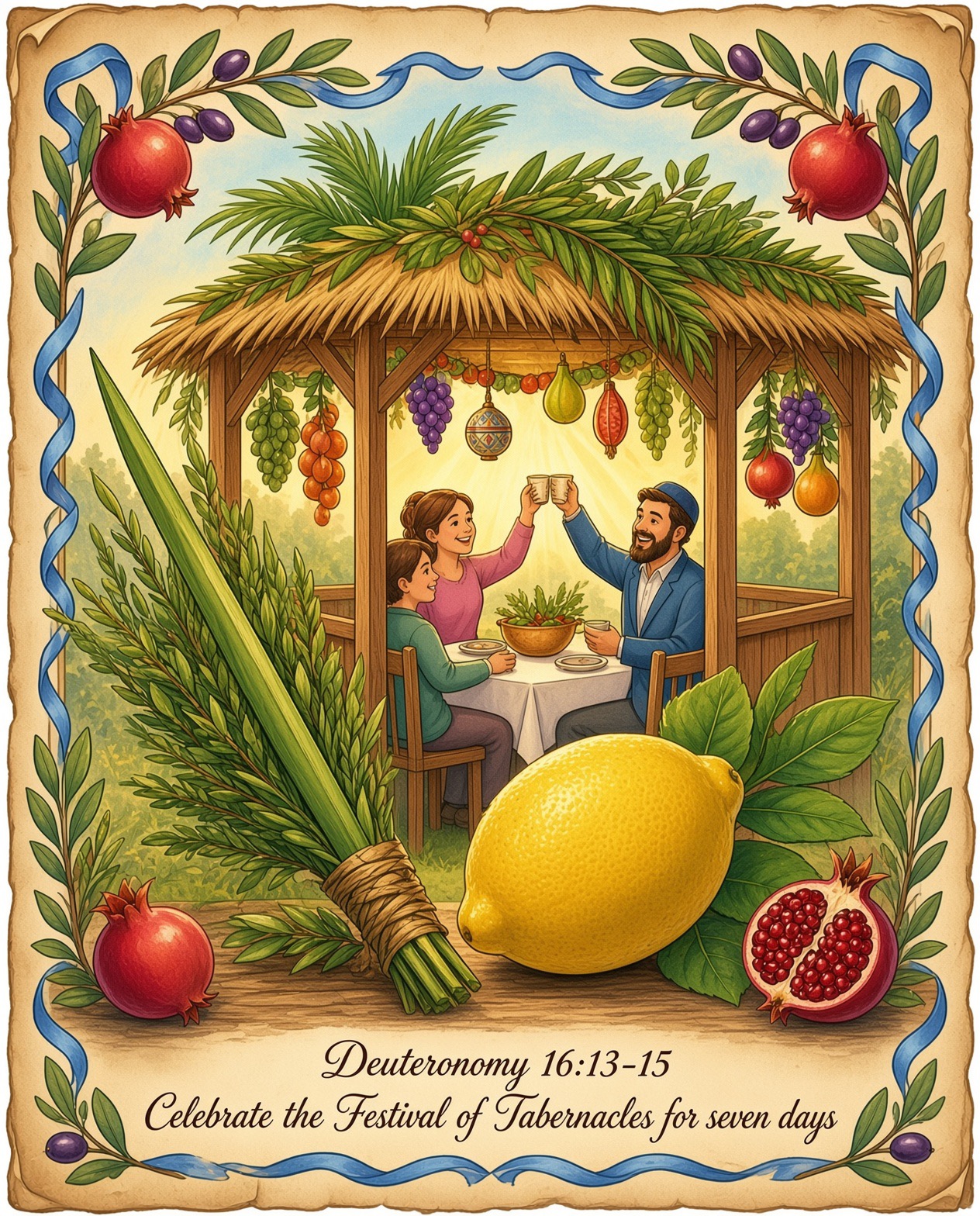
Sukkot (Deut. 16:13–15): The Festival of Booths for seven days. It recalls the 40 years in the wilderness under the Eternal’s clouds of glory and the gathering of the Four Species (Arba’at HaMinim).
Presentation:
Every male must appear before the Eternal during the three pilgrimage festivals with offerings proportional to his blessing.
II. Holiness at the Table: The Wisdom of Kashrut and Modern Biology
The Creator of the human body is the same Creator of the Torah. Therefore, the laws of Kashrut function as laws of biological preservation.
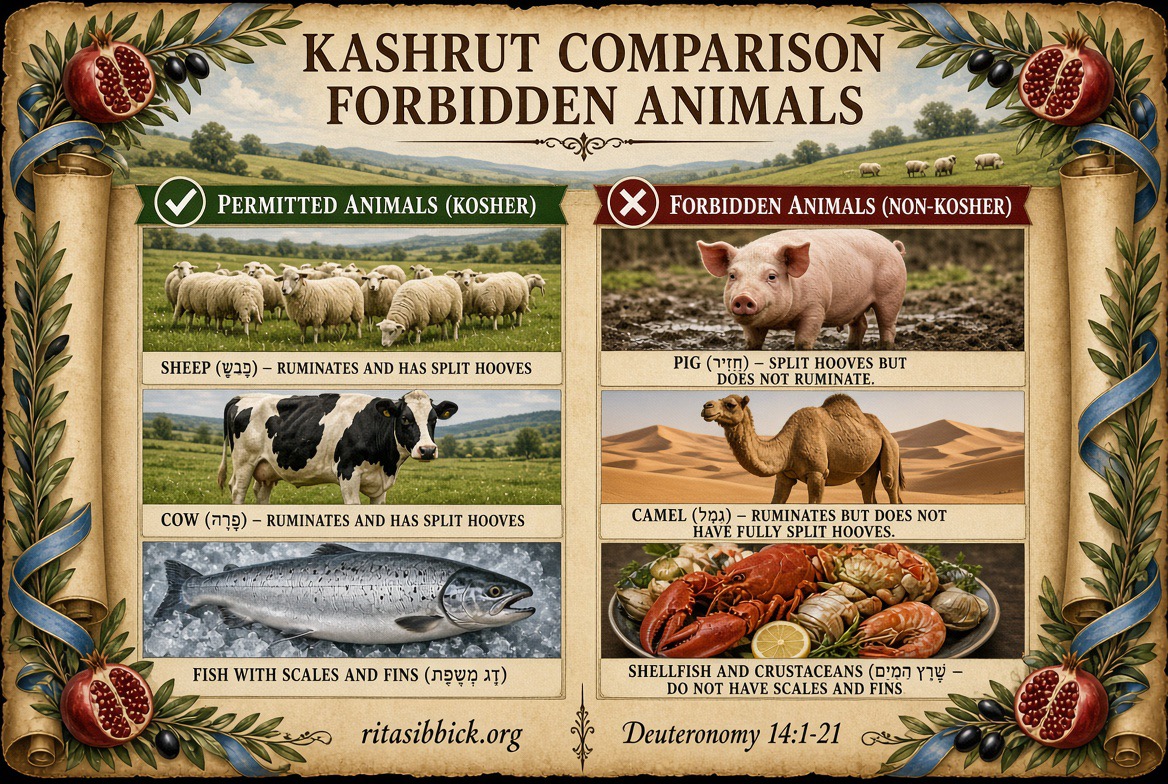
1. Land Animals
Permitted Animals (Pure): Ruminants with split hooves (cows, sheep, goats, deer).
Forbidden Animals (Impure): Non-ruminants or those without split hooves (pork, camels).
Biological and Health Rationale: Ruminants possess multiple stomachs that process food slowly (24+ hours), effectively filtering out toxins. In contrast, swine digest food in only 3 to 4 hours, accumulating parasites (Trichinella), bacteria (Salmonella), and toxins directly within their fat and meat.
2. Aquatic Creatures
Permitted Animals (Pure): Those with fins and scales.
Forbidden Animals (Impure): Creatures lacking fins or scales (shellfish, shrimp, crabs, mollusks, catfish).
Biological and Health Rationale: Shellfish serve as the bottom-feeders and natural filterers of the ocean floor. They accumulate heavy metals (mercurial compounds, lead), biotoxins, and microplastics. Their elevated purine content also increases uric acid levels, triggering metabolic conditions.
3. Birds and Insects
Permitted Animals (Pure): Pure birds (chickens, turkeys, doves).
Forbidden Animals (Impure): Birds of prey, scavengers, and winged insects.
Biological and Health Rationale: Scavenger birds feed on decaying carcasses loaded with pathogens. Consuming them acts as a vector transmitting infectious diseases to humans.
III. Obedience through Faith and Contemporary Scientific Evidence
When the people of Israel stood at the foot of the mountain, they declared with one voice: “Na’aseh VeNishma” (“We will do and we will hear” – Exodus 24:7).
They did not demand laboratory analyses or anatomy lessons to obey; they trusted entirely in the Infinite Wisdom of the Eternal.
Today, epidemiological research confirms that ancient faith:
Health “Blue Zones”: Worldwide clinical studies—such as those conducted by Loma Linda University in California on the Seventh-day Adventist community (who adopted the Biblical dietary code of Leviticus and Deuteronomy)—reveal that this population enjoys one of the highest life expectancies on earth.
Disease Prevention: Data demonstrates that abstaining from impure meats and adhering to Biblical nutritional principles significantly reduces:
The incidence of colon and stomach cancers. Cardiovascular diseases and hypertension. Type 2 diabetes, obesity, and metabolic syndrome.
IV. Philosophical and Historical Reflection
An Unprecedented Social Model: While ancient legal codes (such as the Code of Hammurabi) were drafted to consolidate power and property for elite ruling classes, the Torah established humanity’s first social safety net. The Sabbatical year (Shemitah), debt forgiveness, and mandatory tithes for the orphan and widow transformed compassion into a civic duty and a moral imperative.
Sustaining Education and Equity: The tithe designated for the Levite ensured that the teachers and instructors of the law did not have to compete for land ownership. This maintained an educational and spiritual system free from material corruption while guaranteeing meals for the vulnerable.
Conclusion
Parashat Re’eh places us in the very same position as our ancestors: before a conscious choice. Embracing the commandments of the Eternal is not an act of blind religious submission, but rather the wise decision to align our lives, our health, and our society with the fundamental laws of the Universe. What the Eternal decrees for the holiness of the soul perfectly preserves the life of the body.

