

The Creation, this vast and complex ecosystem we inhabit was designed for the delight and comfort of humanity. Yet, in our pursuit to thrive within it, we have demonstrated an astonishing capacity for adaptation. From the invention of air conditioning, which defies heatwaves, to the sophistication of mobile devices that warn us of earthquakes minutes before they strike, human ingenuity remains our greatest tool for resilience.
Today, Artificial Intelligence stands as an indispensable ally, shortening processes, optimizing resources, and potentially solving the enigmas that threaten our well-being. However, we must ask ourselves: Are we balancing this progress with the fundamental protection of our human integrity?
The Line Between Environmental Management and Fanaticism
It is concerning to observe how certain environmental policies in Europe have morphed into approaches that, far from protecting, compromise human physical and emotional well-being. The prohibition of air conditioning in public transport, for example, ignores a basic biological reality: the human body has physiological limits in the face of extreme heat. When a driver faints due to thermal stress, the system does not just fail it endangers the lives of passengers and pedestrians.
Similarly, in winter, the prohibition of using salt on roads to prevent falls under the guise of soil protectionis leaving a painful trail of fractures and severe injuries, especially among the elderly. When regulations ignore immediate human safety in favor of a rigid environmental ideal, the result is preventable suffering. We often search for someone to blame, but it is the policy itself that requires an urgent recalibration.
AI and the Infrastructure Challenge
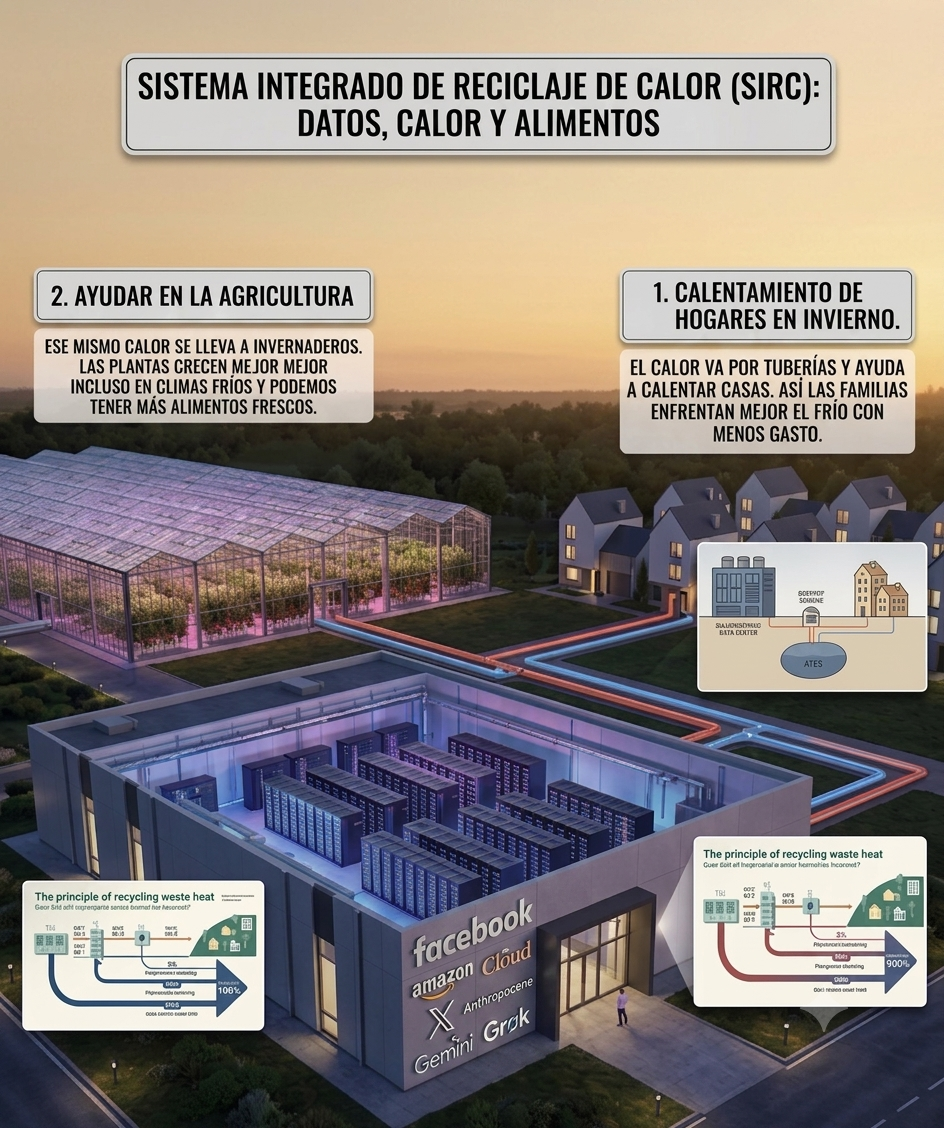
Beyond energy efficiency, we must visualize how this technology translates into tangible well-being. This surplus heat, which today is dissipated as thermal waste, holds incalculable value for our communities:
Heating Homes in Winter: Through thermal distribution networks, this heat can be circulated via pipelines to heat our homes, allowing families to face the harshness of winter with greater comfort and lower energy costs.
Boosting Agriculture: Channeling this heat into specialized greenhouses allows for the optimization of crop cycles, ensuring a constant production of fresh food even in the most adverse climatic conditions
Parallel to these climate challenges, valid concerns have emerged regarding the thermal impact of the data centers that power Artificial Intelligence. It has been noted that these processing cores generate a thermal load that affects the ground and the local environment.
We cannot allow the engine that helps us advance to harm the very ground that sustains us. It is imperative that tech companies be transparent and proactive in relocating and optimizing these centers. They must be installed in optimal geographic areas where thermal dissipation is efficient and environmental impact is minimized through cutting-edge cooling technologies.
Hopeful Solutions: A Two-Fold Path
Faced with this scenario, I asked AI: Is there an immediate alternative while we work on long-term strategies? The answers are highly encouraging and prove that when technology is placed at the service of preservation, the horizon changes:
1. Liquid Immersion Cooling: Moving servers from air-cooled systems to tanks of dielectric fluid. This process is significantly more efficient, reduces energy consumption, and allows heat to be captured for reuse in urban heating.
2. Edge Computing: Decentralizing large data centers into smaller, distributed units. This reduces the thermal load at any single point and improves system latency.
3. Regenerative Energy Architecture: Designing data centers that operate as “batteries” for the local grid, leveraging renewable energy sources that align with climatic demands.
As citizens, we have the right and the duty to demand transparency regarding how this transition is being executed. We want to see, know, and understand the relocation plans for these infrastructures. Technological progress should not be a “blank check,” but a responsible alliance that respects our human dignity and protects our shared home.
Proverbs 2:6
For the Lord gives wisdom; from his mouth come knowledge and understanding.

