
¿Puede la Inteligencia Artificial representar verdaderamente la balanza perfecta de la justicia, o su éxito depende enteramente de la conciencia humana?
“Porque el Eterno da la sabiduría, y de Su boca procede el conocimiento y la inteligencia.” > — Proverbios 2:6 (Mishlei)
El desafío de alimentar la tecnología con ética
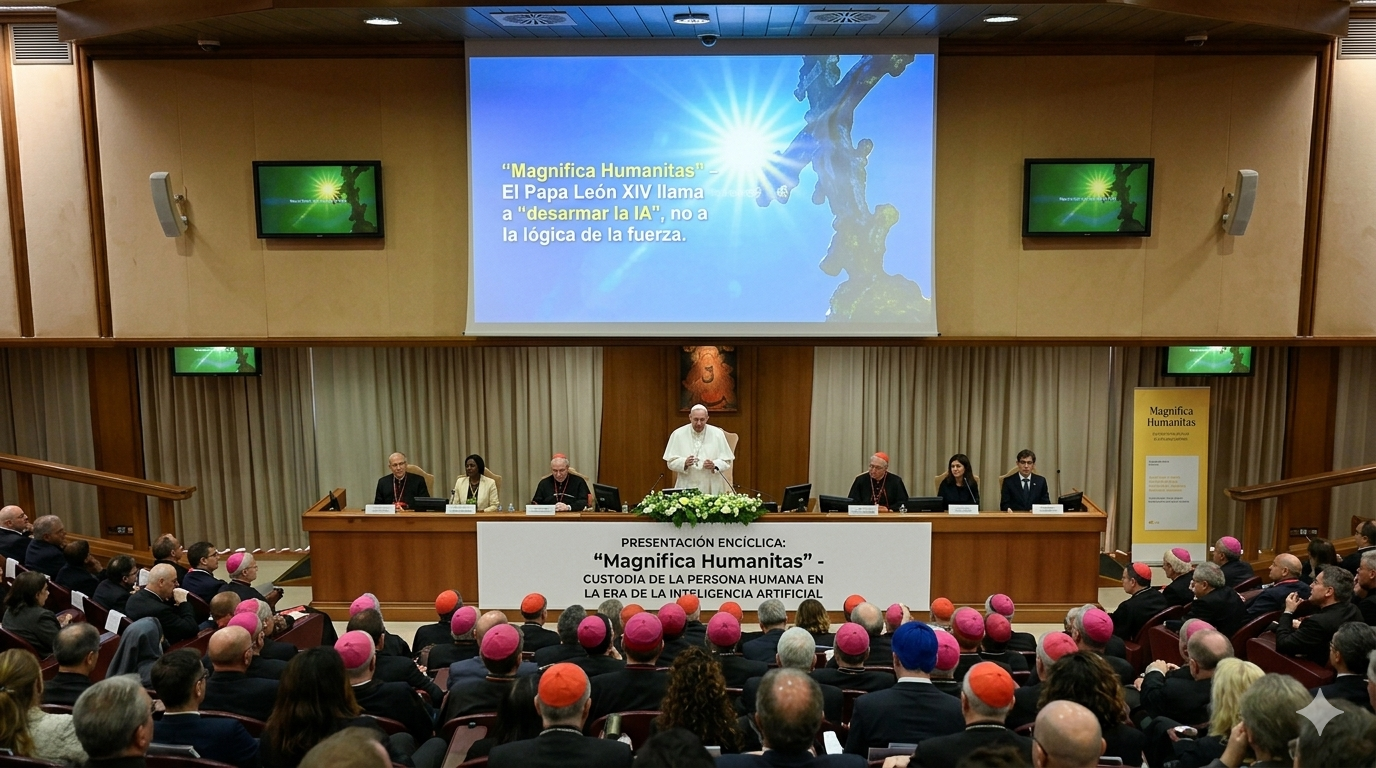
La reciente intervención del papa León XIV sobre la inteligencia artificial ha abierto un debate crucial. Cuando el Pontífice habla de la necesidad de “desarmar” la IA, no se refiere simplemente a apagar las computadoras, sino a quitarle el potencial destructivo en áreas clave, invitándonos a un despertar de las conciencias.
Esta es una postura profunda que toca el núcleo de hacia dónde nos dirigimos como humanidad, basándose en tres ejes esenciales:
• La ética por encima de la autonomía: La tecnología avanza a pasos agigantados, pero la velocidad técnica no siempre coincide con la madurez ética. Los algoritmos carecen de conciencia, moral o empatía. Si dejamos que las decisiones cruciales —desde la economía hasta la salud o la justicia— se automaticen por completo sin supervisión humana, corremos el riesgo de deshumanizar los procesos más vitales de la sociedad.
• El peligro en el escenario global: El uso de la IA en la geopolítica y la seguridad militar ya es una realidad. Cuando se desarrollan sistemas capaces de tomar decisiones letales de manera autónoma, la analogía del Papa con el control de la energía nuclear cobra todo el sentido. “Desarmar” la IA en este contexto significa establecer tratados internacionales firmes para proteger la paz mundial.
• “Despertar conciencias”: Lo más valioso de este mensaje es la invitación a no ser espectadores pasivos. La inteligencia artificial debe ser una herramienta que potencie el ingenio, optimice el trabajo y nos acerque al éxito colectivo, pero siempre bajo el control y el propósito humano.
La IA como la balanza de la justicia: ¿Un ideal posible?
Una inteligencia artificial, en teoría, procesa datos fríos, leyes y hechos de manera puramente objetiva, sin cansancio, sin rencores y sin la subjetividad que a veces nubla el juicio humano. Podríamos verla como la representación ideal de la clásica balanza de la justicia. Sin embargo, el riesgo de “humanizarla” o de confiar ciegamente en ella radica en un matiz crucial: el peligro de la imparcialidad automatizada.
Para que la IA actúe como esa balanza perfecta, depende enteramente de los datos con los que fue entrenada. Si los datos históricos contienen sesgos, prejuicios o decisiones injustas del pasado, la IA no los corregirá por arte de magia; simplemente los automatizará a gran escala, volviéndose implacable pero no necesariamente justa. Por ende, si intentamos que la IA emule las emociones humanas, perdería la objetividad que la hace útil.
Existe una gran diferencia entre aplicar la ley y hacer justicia. La verdadera justicia requiere algo que va más allá de la fría lógica matemática: el discernimiento y la equidad.
• La IA aplicada a la ley puede leer un código y aplicar una sentencia exacta basada en algoritmos.
• La justicia humana, en cambio, analiza el contexto, la intención, las circunstancias atenuantes y la posibilidad de redención.
Si eliminamos por completo el factor humano por temor al error, corremos el riesgo de construir un sistema de justicia perfectamente eficiente, pero completamente desalmado. El verdadero éxito de esta tecnología no está en que reemplace nuestra conciencia, sino en que sirva como esa balanza matemática e incorruptible que asista a las personas a tomar decisiones más justas, transparentes y orientadas al bien común.
El desafío de la “alimentación” humana
La inteligencia artificial no genera sus propios valores morales; es un espejo amplificado de la información y las intenciones de quienes la programan y la nutren.
Esta “alimentación” humana determina el éxito del sistema en dos niveles críticos:
1. La calidad y la neutralidad de los datos: Si una IA se alimenta con expedientes que reflejan desigualdad o criterios desproporcionados, la máquina asumirá que ese es el patrón correcto. En lugar de una balanza incorruptible, se convertirá en una herramienta que perpetúa los errores humanos a gran velocidad. El diseño de estos sistemas exige una rigurosidad ética extrema para limpiar esos sesgos.
2. La intención detrás del algoritmo: El ser humano es quien decide qué prioriza la balanza, ya sea la máxima eficiencia económica o el bienestar social, la equidad y la protección de los más vulnerables. La brújula matemática siempre la calibra un corazón humano.
Tres pilares para una acción estratégica
Al final del día, la tecnología mantiene viva la esperanza de un futuro mejor, pero la responsabilidad sigue estando en nuestras manos. Para lograr que sea un verdadero trabajo en equipo —la precisión de la máquina combinada con la nobleza humana— debemos apoyarnos en tres pilares:
• Auditoría y supervisión humana constante: Nunca debemos dejar a la IA en piloto automático en decisiones que afectan la vida de las personas. El algoritmo debe funcionar como un asistente de soporte, pero la última palabra y la firma siempre deben ser de un ser humano responsable.
• Diversidad en los equipos de desarrollo: Para evitar que una IA refleje los sesgos de un solo grupo, los comités que diseñan y alimentan estos sistemas deben ser multiculturales, multidisciplinarios y contar con expertos en ética, leyes, sociología y derechos humanos.
• Crear “Filtros de Transparencia”: Se deben exigir sistemas de “IA explicable”. La IA no solo debe dar un resultado, sino mostrar paso a paso por qué llegó a esa conclusión. Si el ser humano puede ver el razonamiento matemático, puede detectar inmediatamente si el sistema se está desviando.
El rol de los gobiernos y las leyes
Las empresas se mueven bajo la lógica del mercado y la innovación rápida; por lo tanto, el marco legal de los gobiernos es el único instrumento con el poder legítimo para establecer reglas de juego claras, obligatorias e iguales para todos. Hoy en día, el enfoque legal se está estructurando en tres frentes:
1. Leyes basadas en el nivel de riesgo: Las regulaciones más avanzadas clasifican la tecnología. Si la IA se aplica en áreas de alto riesgo —como la justicia, la salud o la seguridad—, los gobiernos exigen auditorías estrictas, transparencia absoluta en los datos y supervisión humana obligatoria antes de salir al mercado.
2. Protección de datos y propiedad intelectual: Se está legislando para que la “alimentación” de la IA no provenga del saqueo no autorizado de información privada o del trabajo de creadores humanos.
3. Responsabilidad legal clara: Las leyes están dejando claro que cuando un algoritmo comete una injusticia, la responsabilidad no es de la máquina, sino de la empresa que la comercializa o de la institución que decidió aplicarla sin la debida supervisión.
El verdadero éxito de las leyes gubernamentales no es frenar el progreso, sino actuar como los frenos de un automóvil de carreras: no están ahí para que el coche vaya despacio, sino para que el piloto pueda correr a gran velocidad con la seguridad de que no se va a estrellar en la primera curva. Establecer estas fronteras legales es un paso crucial para garantizar que la tecnología mantenga un rumbo de esperanza y beneficio colectivo.
Salmo 8:3-6 (Tehilim)
Cuando veo Tus cielos, obra de Tus dedos, la luna y las estrellas que Tú formaste, digo: ¿Qué es el hombre para que de él Tengas memoria, y el hijo del hombre para que lo visites? Lo has hecho un poco menor que los ángeles, y lo coronaste de gloria y de honra. Le hiciste señorear sobre las obras de Tus manos; todo lo pusiste debajo de sus pies.
 Rita Sibbick